























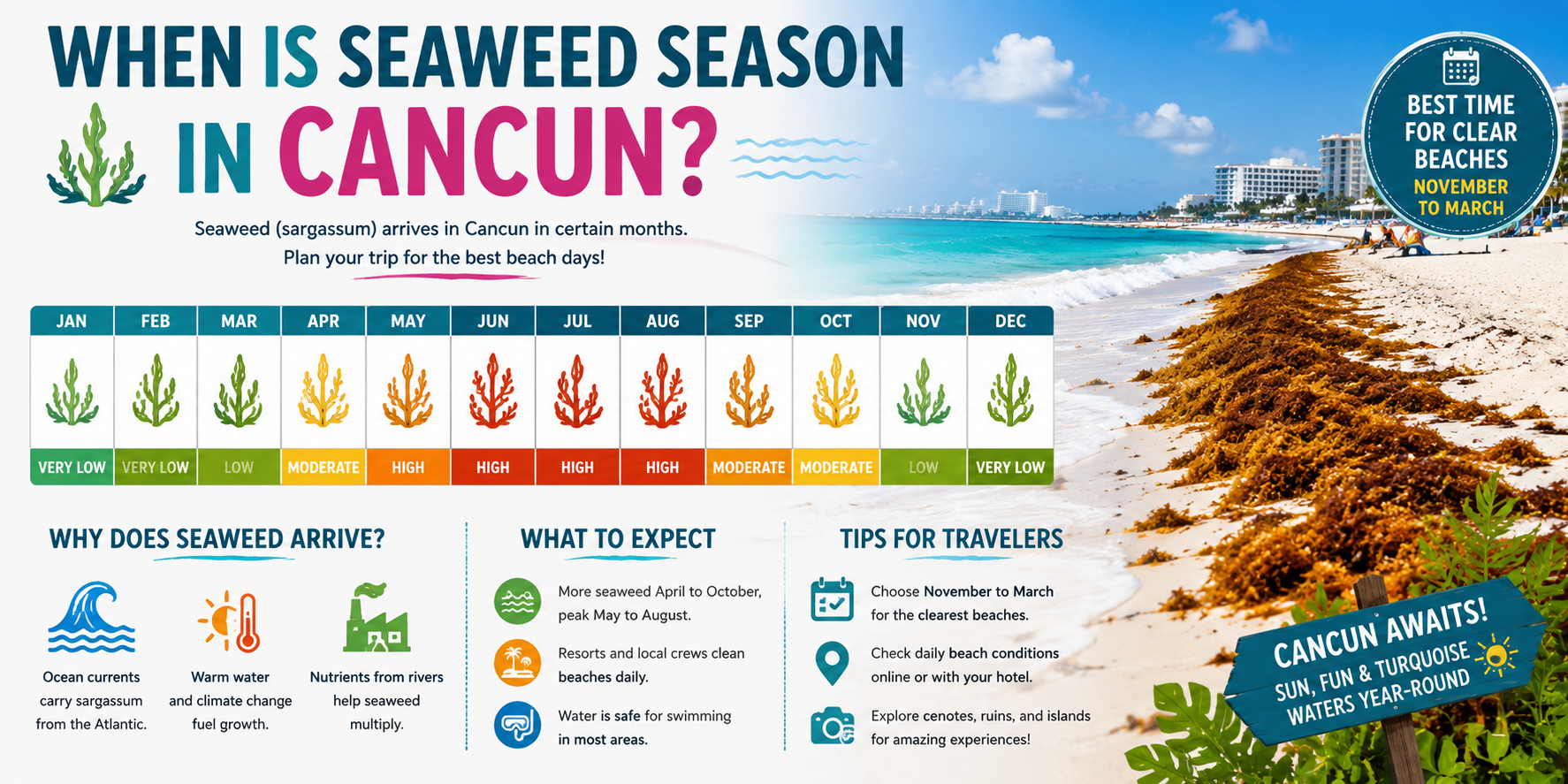
Learn when is seaweed season in Cancun, the best months to visit, how sargassum affects beaches, and tips for planning a perfect trip.
Cancun is one of Mexico’s most famous beach destinations, attracting millions of travelers every year with its turquoise waters, white-sand beaches, and luxury resorts. However, many travelers often ask, when is seaweed season in Cancun before planning their vacation. Understanding the timing of seaweed arrivals can help visitors choose the best months for clear beaches and enjoyable swimming conditions.
Seaweed, commonly known as sargassum, has become a seasonal issue across parts of the Caribbean, including Cancun. While it does not completely ruin vacations, it can affect beach appearance and water quality during certain times of the year. This guide explains when seaweed season is in Cancun, why it happens, and how travelers can prepare for their trip.
What Is Sargassum Seaweed?
Before understanding when is seaweed season in Cancun, it helps to know what sargassum actually is. Sargassum is a type of brown seaweed that floats in large mats across the Atlantic Ocean and Caribbean Sea.
In recent years, stronger ocean currents, warmer water temperatures, and nutrient changes have increased the amount of seaweed reaching Caribbean coastlines. Cancun beaches can sometimes experience heavy seaweed accumulation during peak months.
Although the seaweed is natural and generally harmless, it can produce unpleasant odors as it decomposes on shore.
When Is Seaweed Season in Cancun?
The short answer to when is seaweed season in Cancun is that it usually runs from April through October. However, the heaviest seaweed months are typically between May and August.
During these months, ocean currents push larger amounts of sargassum toward the coastline. Some days may have very little seaweed, while others may see significant accumulation depending on weather and tides.
Travelers should remember that seaweed conditions change daily. Resorts and local authorities often clean beaches early each morning to maintain attractive conditions for visitors.
Monthly Breakdown of Seaweed Conditions
Understanding the seasonal patterns can help travelers decide the best time to visit Cancun.
| Month | Seaweed Conditions | Travel Experience |
| January | Very low | Excellent beach conditions |
| February | Low | Clear water and clean beaches |
| March | Low to moderate | Pleasant weather |
| April | Moderate | Beginning of seaweed season |
| May | High | Increased beach cleaning |
| June | High | Peak seaweed arrivals |
| July | High | Warm weather and busy tourism |
| August | High | Variable beach quality |
| September | Moderate to high | Hurricane season overlap |
| October | Moderate | Gradual improvement |
| November | Low | Better beach conditions |
| December | Very low | Ideal for beach vacations |
This table provides a helpful overview of when is seaweed season in Cancun and what visitors can generally expect throughout the year.
Why Does Seaweed Reach Cancun?
Many travelers wonder why seaweed has become more common in recent years. Several environmental factors contribute to the increase in sargassum.
Ocean Currents
Atlantic Ocean currents naturally carry seaweed toward the Caribbean coastline, including Cancun.
Rising Water Temperatures
Warmer ocean temperatures encourage sargassum growth and expansion.
Nutrient Pollution
Agricultural runoff and nutrients entering the ocean may also increase seaweed growth.
These environmental changes help explain when is seaweed season in Cancun and why some years are heavier than others.
Which Cancun Beaches Are Most Affected?
Not all beaches experience the same amount of seaweed. Beaches facing the eastern Caribbean Sea usually receive more sargassum.
Areas commonly affected include:
- Hotel Zone beaches
- Playa Delfines
- Riviera Maya coastline
- Tulum beaches
Meanwhile, locations like Isla Mujeres often experience less seaweed due to their geographic positioning.
Travelers researching when is seaweed season in Cancun may also consider staying at resorts with strong beach-cleaning efforts or visiting nearby islands with calmer waters.
Best Time to Visit Cancun for Clear Beaches
If avoiding seaweed is your priority, the best months to visit are generally:
- December
- January
- February
- Early March
These months usually offer the clearest beaches and lowest sargassum levels. The weather is also sunny and comfortable, making it ideal for outdoor activities.
Because many travelers ask when is seaweed season in Cancun, these winter months are often considered the safest choice for beach lovers.
How Resorts Handle Seaweed
Many resorts in Cancun work hard to minimize the effects of seaweed season. Hotels often use:
- Daily beach cleaning crews
- Seaweed barriers offshore
- Tractors and removal equipment
- Special maintenance teams
Luxury resorts especially focus on keeping beaches clean for guests. Even during peak seaweed months, many visitors still enjoy excellent vacations.
Understanding when is seaweed season in Cancun helps travelers set realistic expectations while appreciating the efforts resorts make to maintain beach quality.
Activities to Enjoy During Seaweed Season
Even if seaweed appears on beaches, Cancun still offers many exciting attractions and activities.
Explore Cenotes
Natural freshwater sinkholes called cenotes provide crystal-clear swimming opportunities away from seaweed.
Visit Mayan Ruins
Popular archaeological sites include:
- Chichen Itza
- Tulum Ruins
- Coba
Enjoy Water Parks
Family-friendly attractions like Xcaret and Xel-Ha remain popular throughout the year.
Take Island Tours
Boat trips to Isla Mujeres or Cozumel often provide cleaner beach experiences.
Travelers asking when is seaweed season in Cancun should know that beach conditions rarely affect the entire vacation experience.
Tips for Traveling During Seaweed Season
If you plan to visit during seaweed season, these travel tips can help improve your experience.
Choose Resorts Carefully
Look for hotels known for excellent beach maintenance.
Check Daily Seaweed Reports
Many websites and social media groups provide updated beach conditions.
Plan Flexible Activities
Include excursions, cultural attractions, and indoor entertainment in your itinerary.
Visit Early in the Day
Beaches are usually cleanest in the morning after overnight maintenance.
These practical strategies make it easier to enjoy Cancun even during periods when seaweed levels are higher.
Does Seaweed Affect Swimming?
In most cases, swimming remains safe even during seaweed season. However, large amounts of seaweed can make entering the water less comfortable.
Some travelers may also notice:
- Strong odors
- Murky water
- Reduced snorkeling visibility
This is another reason many tourists ask when is seaweed season in Cancun before booking beachfront vacations.
Conclusion
Understanding when is seaweed season in Cancun helps travelers better prepare for their vacation and choose the ideal travel months. Seaweed season generally runs from April to October, with the heaviest levels often appearing between May and August.
Despite seasonal seaweed, Cancun remains one of the world’s top beach destinations thanks to its stunning resorts, rich culture, exciting excursions, and beautiful coastline. Many hotels actively clean beaches daily, and countless attractions beyond the shoreline ensure visitors still enjoy unforgettable vacations.
For travelers seeking the clearest beaches, winter and early spring are usually the best times to visit. However, with proper planning, Cancun can be enjoyable year-round regardless of seaweed conditions.
FAQ
When is seaweed season in Cancun at its worst?
Seaweed season is usually worst from May through August.
Is Cancun still worth visiting during seaweed season?
Yes, many resorts clean beaches daily, and there are plenty of attractions beyond the beach.
Which months have the least seaweed in Cancun?
December through February typically have the lowest seaweed levels.
Does seaweed affect all Cancun beaches equally?
No, some beaches and nearby islands experience less seaweed than others.
Can you swim during seaweed season in Cancun?
Yes, swimming is generally safe, although beach conditions may vary depending on seaweed levels.