















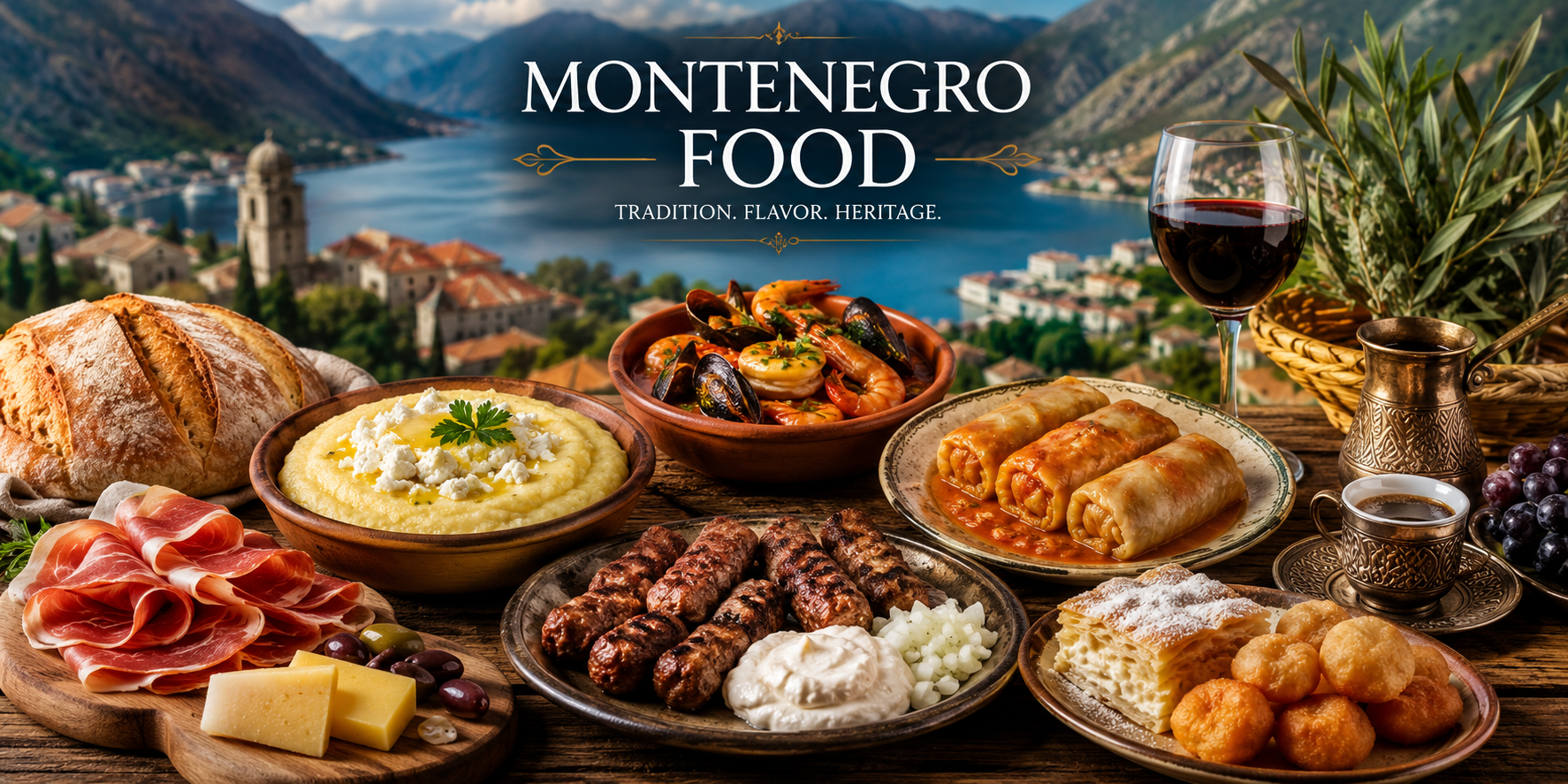
Discover the best Montenegro food, including traditional dishes, seafood, desserts, and local drinks in this complete culinary guide.
Montenegro is a beautiful Balkan country known for its mountains, beaches, and rich culinary traditions. Travelers visiting the Adriatic nation quickly discover that montenegro food is one of the country’s hidden treasures. Influenced by Mediterranean, Turkish, Italian, and Slavic cuisines, the local dishes are flavorful, hearty, and deeply connected to regional traditions.
From fresh seafood on the coast to smoked meats and cheese in the mountains, montenegro food offers something for every taste. Whether you are planning a trip or simply exploring world cuisines, this guide will introduce you to the most popular dishes, ingredients, and dining customs in Montenegro.
Why Montenegro Food Is Unique
One reason montenegro food stands out is the country’s geographical diversity. Coastal towns serve Mediterranean-style seafood dishes, while northern regions focus on meat, potatoes, and dairy products. Local recipes are often simple but prepared with fresh ingredients and traditional cooking techniques.
The cuisine also reflects centuries of cultural exchange. Ottoman influences introduced grilled meats and pastries, while Italian traditions inspired pasta and seafood recipes along the Adriatic coast.
Traditional Montenegro Food Dishes
Here are some of the most famous dishes you should try when exploring montenegro food.
Njeguški Pršut
Njeguški pršut is Montenegro’s famous dry-cured ham. It comes from the village of Njeguši and is smoked and aged for months. The ham is usually served with local cheese, olives, and bread as an appetizer.
Kačamak
Kačamak is a traditional mountain dish made from potatoes, cornmeal, and cheese. It is rich, creamy, and highly filling. Many locals consider it comfort food and enjoy it during cold weather.
Ćevapi
Ćevapi are grilled minced meat sausages commonly served with onions, flatbread, and sour cream. This dish is popular throughout the Balkans and remains an important part of montenegro food culture.
Buzara
Buzara is a seafood specialty prepared with shrimp or mussels cooked in olive oil, garlic, parsley, and white wine. Coastal restaurants often feature this dish because of the country’s access to fresh seafood.
Sarma
Sarma consists of cabbage leaves stuffed with minced meat and rice. It is usually served during holidays and family gatherings.
Popular Ingredients in Montenegro Food
The ingredients used in montenegro food are fresh and locally sourced. Olive oil, herbs, seafood, smoked meats, and dairy products are common in many dishes.
| Ingredient | Common Use | Region |
|---|---|---|
| Olive Oil | Seafood and salads | Coastal areas |
| Smoked Ham | Appetizers | Central Montenegro |
| Cheese | Breakfast and side dishes | Mountain regions |
| Fresh Fish | Main meals | Adriatic coast |
| Potatoes | Traditional dishes | Northern Montenegro |
These ingredients help create the authentic flavors that define montenegro food.
Seafood in Montenegro
Seafood plays a major role in coastal cuisine. Restaurants along the Bay of Kotor and Budva Riviera serve freshly caught fish, squid, octopus, and shellfish daily.
Grilled fish with olive oil and herbs is one of the simplest yet most delicious examples of montenegro food. Black risotto, made with squid ink, is another popular coastal specialty.
Travelers visiting seaside towns often enjoy seafood paired with local white wine while overlooking the Adriatic Sea.
Traditional Montenegro Desserts
Desserts are another important part of montenegro food culture. Many sweets have Ottoman roots and feature honey, nuts, and syrup.
Priganice
Priganice are fried dough balls often served with honey, jam, or cheese. They are commonly enjoyed for breakfast or dessert.
Krempita
Krempita is a creamy custard pastry with flaky layers. It is popular in cafes throughout Montenegro.
Baklava
Baklava is widely available and reflects the region’s Ottoman culinary influence. Layers of pastry, nuts, and syrup make it a favorite dessert for locals and tourists alike.
Montenegro Food and Local Drinks
No exploration of montenegro food is complete without mentioning local beverages.
Rakija
Rakija is a strong fruit brandy commonly served before meals. It is considered a symbol of hospitality in Montenegro.
Montenegrin Wine
Montenegro has a long history of winemaking. Red wines made from the Vranac grape are especially popular. Many vineyards produce high-quality wines that pair perfectly with grilled meat and cheese dishes.
Turkish Coffee
Coffee culture is important in Montenegro. Traditional Turkish-style coffee is often enjoyed slowly while socializing with friends and family.
Dining Culture in Montenegro
Dining in Montenegro is usually relaxed and social. Meals are often shared among family members, and hospitality is highly valued.
When experiencing montenegro food, visitors may notice generous portions and friendly service. Locals enjoy long meals filled with conversation, especially during weekends and holidays.
Restaurants range from traditional mountain taverns to elegant seaside seafood establishments. Many places focus on homemade recipes passed down through generations.
Best Places to Try Montenegro Food
Different regions offer unique culinary experiences.
- Coastal towns like Budva and Kotor specialize in seafood dishes.
- Northern mountain regions are famous for hearty meals like kačamak.
- Central Montenegro is known for smoked meats and local cheeses.
Exploring multiple regions provides a deeper understanding of the diversity found in montenegro food.
Healthy Aspects of Montenegro Food
Many traditional dishes use natural ingredients without heavy processing. Fresh vegetables, olive oil, seafood, and grilled meats contribute to a balanced diet.
Mediterranean influences also make parts of montenegro food relatively healthy compared to heavily processed modern cuisine. Coastal dishes especially feature nutritious ingredients rich in vitamins and healthy fats.
Modern Trends in Montenegro Food
In recent years, Montenegro’s culinary scene has evolved. Young chefs are combining traditional recipes with modern presentation styles. Organic farming and sustainable seafood practices are also becoming more common.
Tourism has encouraged restaurants to showcase authentic montenegro food while adapting to international tastes. However, traditional flavors remain central to the country’s culinary identity.
Conclusion
Montenegro’s cuisine reflects the country’s history, geography, and cultural diversity. Whether enjoying seafood on the Adriatic coast or hearty mountain meals inland, travelers can experience a wide variety of flavors.
The richness of montenegro food lies in its simplicity, freshness, and tradition. From smoked ham and grilled meats to pastries and local wines, every dish tells a story about the country and its people.
Anyone interested in Balkan cuisine should explore the unique tastes that make montenegro food unforgettable.
FAQ
What is the most famous Montenegro food?
Njeguški pršut, kačamak, and seafood dishes like buzara are among the most famous foods in Montenegro.
Is Montenegro food spicy?
Most traditional Montenegro food is flavorful rather than spicy. Herbs, garlic, and olive oil are more commonly used than hot spices.
What drinks are popular in Montenegro?
Rakija, local wines, and Turkish-style coffee are very popular beverages in Montenegro.
Is Montenegro food influenced by other cultures?
Yes, Montenegro food includes influences from Mediterranean, Ottoman, Italian, and Slavic cuisines.
Are vegetarian options available in Montenegro?
Yes, many dishes include vegetables, cheese, beans, and salads suitable for vegetarians.