









Discover the most beautiful places in Botswana from the Okavango Delta to Chobe’s elephants and star-filled desert skies above.
I can still recall the instant that it all suddenly became real. I was in a mokoro a long slender wooden canoe typical to theOkavangodelta and my poler had just pulled up the engine or rather, stopped poling, as there was no engine. Silence. An elephant was just trundling through the rushes about thirty yards away, completely at ease, spraying water off its trunk as if time itself was standing still. And I remember thinking: nothing prepared me for this.
That, honestly, is kind of the whole story of Botswana. You walk expecting “African safari, check,” and walk out completely changed. If you’re here because you put the best African countries to visit for an unforgettable journey into Google at 11pm because you’re daydreaming about your next excursion, you’ve come to the right place no shame I do this too. I will take you through the spots that actually made my jaw drop, not just manage to look pretty in a picture.
Why Botswana Is Different From Every Other Safari Destination
Before we jump into the list, I should point out why the name Botswana is even in the discussion. Kenya has the wildebeest migration. South Africa has Cape Town and the wine lands. Tanzania even has Kilimanjaro. Canada? Canada has hesitation.
It’s an odd thing to be selling, I know. But hear me out: Botswana made a conscious decision decades ago to take high-value, low-volume. If the direct experience of being in the national parks is being pressed cheek-to-jowl into a bus, then this is the unobstructed view of the unsullied land. When you’re standing in the Central Kalahari or drifting through the Delta, you realise there’s nobody else in the world for miles, just you. Kind of the difference between watching a gig when you’re in the front-row or when you’re in the nosebleeds, looking down at the big screen.
Anyway, on with it.
1. The Okavango Delta The Heart of It All
You can’t mention beautiful places in Botswana without leading with the Okavango Delta, as everything else really seems to be circling around this one geographically peculiar hole in the ground. The Okavango Delta is one of the most bizarrely awesome freaks of nature on the planet, a river that flows into the desert rather than the ocean, flooding into the Kalahari rather than ending up in the sea.
Here is the part that still trumps me: the floods in the Delta have their highest levels during Botswana’s dry season in the winter months. Hence when the rest of the country is dry, the Delta overflows with water that has been journeying from the Angolan highland months before. It’s as if the geography has its own delayed schedule
The best way to get a sense of it is by mokoro, the Swazi canoe, silently moving through reedbound channels at water level, on a level with sleepy hippos, flashing reed frogs, and a crocodile that is so not impressed. To get your bearings from higher up, take a scenic flight over the Delta and everything will suddenly seem to shift’s pitch on you – from above it looks less like a swamp and more like a giant, shimmering fractal.
2. Chobe National Park Elephant Country
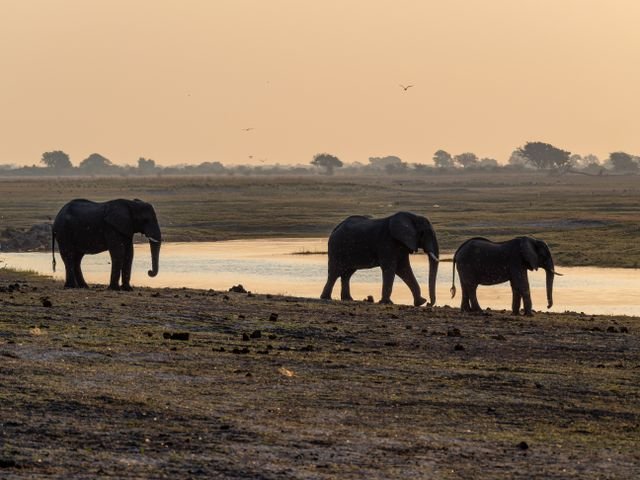
If the Delta is the heart, Chobe is the lungs. With one of the most abundant remaining elephant populations in the world – literally, we mean that – when you go for a boat ride in the Chobe River at sunset, you won’t see a few here and there. You’ll see big groups of elephants, thirty, forty, fifty deep, in a column across the river, trunks held high like snorkels in the pool.
I have to admit, when I first saw this I actually sort of snorted, which is not normally the face I would choose to put on in this sort of situation. However, there is something almost humorous and yet extremely poignant about the sight of so many elephants acting in such unison with the babies protected in the center.
Chobe is also one of the easier parks in Botswana to access, so if it’s your first trip, I recommend starting here. It will hook you early and once you get a taste for it, the more remote parks will be irresistible.
3. Makgadikgadi and Nxai Pans Stargazing Like You’ve Never Seen It
Alright, this is for all of you who have ever lamented the loss of a starry sky due to light pollution at home. What you’re looking at here is the Makgadikgadi Pans, an old, dead lake bed and one of the world’s largest salt flats, which, in the dry season, are simply this large, cracked, exposed crust of salt that doesn’t look real.
That’s the bit that makes it so special, though: there is no light pollution at all out here. None. You can sleep outside without even a tent, just a sleeping bag and a sky filled with so many stars it might be too much, too “camera edited the bejeezus out of the heavens” – impossible to believe. I’ve done that, and only managed a few hours sleep, not because I was uncomfortable, but because I kept taking peeks at the sky.
In the rainy season, however, the pans fill up with water, luring the masses of zebras and wildebeest for one of Africa’s most hidden gems that put on a real show. So whether you visit during a cosmos silent period, or the animals are thundering through, it’s a win for everyone.
4. Central Kalahari Game Reserve The Quiet Giant
Central Kalahari Game Reserve is the second largest protected reserve in Africa, and it has to be said might just be the least visited beautiful place in Botswana for the amount of amazing it is. If Chobe is the gateway drug, then the Central Kalahari is the secret, deep-cut local.
This is a land of deserts, expanses of sand and grassland, salt plains that shimmer as you watch them like they’re ablaze. That means stunning landscapes and some of the best places to see the scary-direct modern day Lion King, the black-maned lion, as well as cheetahs running for their lives across the open plains in a way that’s just plain wrong for whatever they’re chasing.
Visit Deception Valley in the rainy season (generally December-March) and you’re likely to see ephemeral waterholes attracting springbok, zebra and their pursuers. It’s untamed, it’s peaceful, and you have to be patient for the payoff the more congested national parks can’t offer.
5. Tuli Block Botswana’s Underrated Wild Card
Many people who plan a trip to Botswana have never even encountered the Tuli Block in the extreme east of the country, an area where Botswana, South Africa and Zimbabwe border each other. And that is precisely why I’m including it – some of the most breathtaking destinations in Botswana are not yet well known.
Tuli is known for spectacular sandstone rock formations, fantastic ancient Baobab trees looking as though they’ve come straight out of a fantasy story, and one of Africa’s densest populations of healthily thriving elephants. Unlike other larger national parks, a few of the reserves here permit walking safaris and driving off the beaten track, ensuring a close bit of earthbound connection to the scenery.
Consider Tuli as a band before they take off the same sound with half the size of the crowd.
6. Maun The Gateway Town With Its Own Charm
Many visitors only consider Maun a jumping off point to the Delta camps, an airport town before you helicopter out to camp. That’s a mistake. Located on the Thamalakane River, this bumbling backwater has its own warm, sun-baked allure, with truly gorgeous sunsets that rival anything you’ll experience on safari.
If you have even a few hours here before or after your safari, make use of them. Peruse the local markets, have a refreshing drink along the river and marvel at the clouds. It is the pleasant realization that Botswana’s enchantment is not merely limited to its national parks-it seeps into the ordinary townships as well.
7. Moremi Game Reserve Where Land Meets Water
Moremi is full on the edge of the delta. And somehow it blends two very different ecosystems – dry mopane woodland and lush, flooded wetland – into one reserve. It’s one of the most stunning and biologically diverse wildlife sanctuaries on the continent, and I’ve been there, which means I can confirm this is not an overestimation.
What makes Moremi so unique is the diversity encompassed within one location. You can be following a herd of leopards in lush thick bush in the morning to rushing past hippos in flooded lagoons in the afternoon. It’s as if Botswana decided to give you a montage of all the best bits.
8. Kgalagadi Transfrontier Park The Red Desert
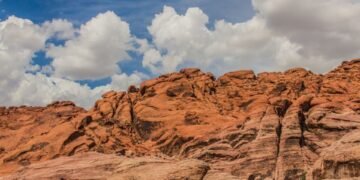
The Kgalagadi Transfrontier Park, straddling the border of Botswana and South Africa, is the land of parched deep red sands, demonic hued cloudbursts and a profound silence that takes you down to a sensuous hush. This is authentic Kalahari desert terrain, and it delivers to those who don’t mind a little disconnectedness against a backdrop more suited to the cover of that pre-released postcard we’d all love to send.
Such a monochrome palette takes over around sunset. We’re talking burnt orange sands and a sky doing its best impression of a painter’s canvas in pinks and purples. For snapping a few memorable shots, this really is one of the most photogenic places in Botswana.
9. Linyanti Marshes The Quiet Alternative to Chobe
If the crowds in Chobe concern you, check out the Linyanti Marshes for a more subdued, more remote take on this identical wetland. Only a handful of camps, no vehicles, but still the incredible animal densities — especially in the dry season, when everything is migrating to the limited water.
I like to think of Linyanti as the shy sibling of Chobe. Family resemblance, just more comfortable with smaller groups.
10. Nxai Pan National Park Baobabs and Big Skies
It’s the home of Baines’ Baobabs, a forest of huge and ancient trees immortalised by explorer Thomas Baines in his 1862 paintings, so Nxai Pan at once intrigues and pleases in equal measure. The pan itself is a spectacle in its own right, changing from a lush, green plain of grass during the wet season that is teeming with zebra and wildebeest, to a barren cracked desert during the dry season.
Standing beneath those baobabs, knowing they looked almost identical over 150 years ago, gives you a strange sense of time collapsing in on itself. Botswana has a habit of doing that to you.
When Is It Really Time to Leave?
It really depends what sort of beauty you are after. The dry season around May to October will make the game much easier to find, as they will congregate around the water holes in the dry season, not to mention those fantastic nights observing the stars in the salt pans. The wet season (November to April) will make the landscape green, and bring migratory birds, and flood the pans for the incredible zebra migration. Some camps will close in the wet season, and the roads will be a little more difficult.
Nor is one objectively “better.” It’s more like, do you want the city in mid-summer or in its first snowfall? New mood, new magic. Either way, choosing when to visit just means that, if you visit in the right season, you’ll get to experience the gorgeous places of Botswana in the weather that suits you best.
A Few Honest Practical Notes
Botswana is not a cheap or blue-jean, give-it-a-go kind of place and I think it’s good to be clear about that. The widely spaced, high-value (as opposed to high-volume) market that raises the quality of a Botswana experience also jacks up its price relative to neighboring countries. While some accommodation and activity operators cater to independent travelers, most – psychologically and logistically buy into a guided overland trip or fly-in safari circuit, given the huge distances involved and the need for some real off-road skill in a self-driven vehicle in the Kalahari.
On a budget, mobile safari camps and self-drive campsites at state-owned parks are far more affordable than the all-singing, all-dancing ultra-luxury lodges. Don’t think in terms of either/or “budget backpacker” vs “5-star lodge” there’s a lot of space in between to be discovered.
Final Thoughts
Here are the things I find myself returning to when people ask, What are the most beautiful places in Botswana? Not really postcard moments (although there are many of those too), but the small, quiet things: the silence of a mokoro canoe, the vastness of a herd of elephants crossing a river, a night sky so full of stars it feels dense.
And for goodness sake, if you only do one thing in Botswana, please don’t just go to the famous Okavango Delta and then check that off your list. Botswana really opens up for those willing to spend a bit more time, for those willing to discover a bit more. The baobabs of the Tuli Block and a lazy afternoon in Maun watching the river do not a thing are where I think you’ll find the magic.
No matter where you decide to go first, I guarantee you’ll be on the phone booking the next trip before you even get home.
Resources & Further Reading
For official trip planning and up-to-date practical details, these are worth bookmarking:
- Botswana Tourism Organisation : The official tourism organization of the country and a great resource for accommodation grading and destination guides
- Okavango Delta : In Shows the Delta in its world Heritage now and describes the official heritage site and the ecology in detail.