


















Discover the best beaches in Greece , from pink sands to hidden coves, plus real travel tips from someone who’s visited them all.
I can still recall the precise second when Greek beaches seduced me. Standing on a cliff on Zakynthos, sweat streaming down my forehead into my eyes, asking myself how the hell I could have been so foolish as to turn down the extra ten euros for the boat tour. And then I looked down.
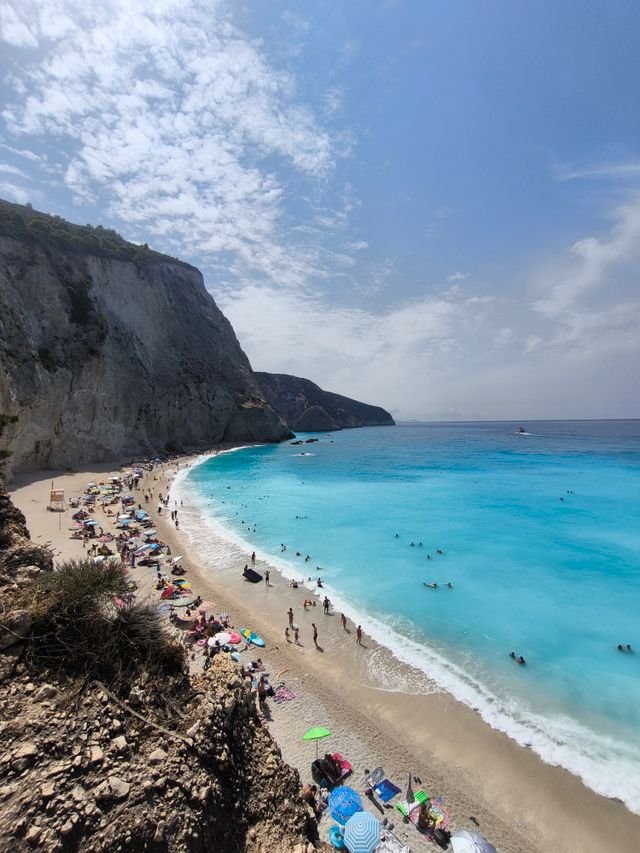
Navagio, the infamous shipwreck cove, lay before me like something you see on a screensaver off the computer. Except it was real and somehow better than anything I could ever find online. The water wasn’t simply blue. It raced through a mind-boggling palette of turquoise, teal and a blue so over-saturated it had to have been Photoshopped. This nearly disqualifying every other beach I have ever graced. I chortled aloud. Alone. On a ledge. Like a foolish person.
That was eight years and eleven Greek islands ago, and I‘m still not over it. If you‘ve come here to find out about the beaches for your holiday because if it‘s anything like me, you had to sit down at 11 p.m., turn your laptop on, and type ‘beaches in Greece’ while your lovestruck other half was asleep beside you and dreaming of a hot place then I understand. I‘ve done that. Let‘s discuss where you should actually go and since timing makes or breaks a trip like this, I’ve also put together everything you need to know in Greece Climate in September
Why Greek Beaches Hit Different
Greece: the one place in the world that isn‘t really one place, but is in fact half a dozen thousand places. That’s exactly what the Greek National Tourism Organisation will tell you; Greece has over 6000 islands and islets, of which only a couple of hundred are inhabited. You‘ll never run out of beaches to go to in Greece.
But it‘s not only the quantity of Greek beaches. They also possess this almost theatrical aspect that I can only compare to a film set. Limestone rocks cutting into the water as if you were in the middle of a film scene, and the different colors of sand, from white, to pink, to even black places of volcanic origin, all make you feel amazed. And the water is transparent like the most beautiful pool, which makes you go like, ‘Woa, this is nice’.
It’s as if Caribbean beaches are the Vibe-y friend that is always looking good without even trying… and Greek beaches are the all-of-a-sudden oh-so-dramatic one. Who just appears at every occasion. When friends ask me where to go in Greece, I say the same thing: first, decide the Vibe, then decide the Island.
Crete: Where I Learned Patience
Let‘s start with Crete, since it‘s the largest of the islands and honestly could be its own post. Lonely Planet has a pretty good summary of the best beaches on Crete if you‘re looking for a second opinion. My introduction to Greek beaches was Elafonissi Beach, in the southwest corner of the island. I should warn you about something that no one warned me about: the pink sand is authentic, but it is not obvious. I had seen photographs that appeared to be someone throwing strawberry milk into the ocean, and I arrived expecting Barbie‘s dream beach. In practice, you see a delicate shade of pink glamorous, but you have to look for it. This is especially true when you are closer to the water where shell bits sometimes mix in with the sand.
The beach here stayed shallow and hot, a kind of giant warm bathtub. It was fabulous for families or anyone (me) who doesn’t want cold waves to smack them first thing. Get there early. I arrived at noon in August, and the parking situation alone would have provided enough material for even ten years of therapy.
And then there‘s Balos Beach, an adventure in boat or dirt-road car journey so rugged it could make you rethink the coverage you got on your rental. Still, approaching from atop the peninsula where the lagoon forks into these surreal splits of purples, teals and turquoises makes it all worth it. Sitting atop that peninsula, happily polishing off a partly melted sandwich, ranks up there with any of my top five peri-urban eating experiences. This is both for the location and in spite of the sandwich.
Santorini: Beautiful, But Let‘s Be Honest About the Sand
While it is Santorini that takes the Instagram games for the picturesque white villages, its beaches are a completely different beast. And I say that completely in love with the sand here that can burn your feet as though you‘re in training for a fire-walking ritual.
The real star of the show is Red Beach, just outside Akrotiri. Red and black volcanic cliffs guard a tiny cove, and the contrast between these colors and the brilliant blue sea is truly overwhelming; it looks like the planet turned up and decided to have a beach. It‘s small, popular and the volcanic sand will burn your feet to a crisp by noon. We highly recommend Feet-shoes. I wasn‘t wearing any the first time I visited and spent all of two seconds hopping around the beach in a most undignified manner that the Germans taking pictures thought was hilarious.
Perissa and Kamari are the more sensible brothers and sisters. They are long stretches of black volcanic sand with beach bars, sun beds, and none of the “clamber over rocks and rubble to get there” nonsense. If Red Beach is the high-maintenance ex you can‘t quite forget, then Perissa is the steady one that turns up in time with a bottle of SPF.
Zakynthos: The One That Started It All
Back to Navagio, since it warrants more than one paragraph. The wreck of the ship, a former smuggling vessel that ran aground in the 1980s, sits abandoned on a deserted spit of white sand. Mountains guard the shore. They rise so steeply that they nearly bow forward, eager to see what all the fuss is about. Most visitors arrive at the beach by boat, and I would recommend they do so. Sure, you get the famous photo from the water, but you also get a chance to swim in the irresistible blue instead of just seeing it from 200 feet above.
Close to Zakynthos, the Blue Caves are where the sunlight bends the turquoise water through the sea caves, turning the water into electric, otherworldly blue. It‘s not quite “beach” but the “underwater lightshow.” It makes an excellent accompaniment to a beach day if you hire a boat with an excursion that takes you both.
Worth knowing before you go: a handful of the beaches in the south of Zakynthos are located within the National Marine Park of Zakynthos. It is one of the major breeding grounds for the loggerhead sea turtle in the Mediterranean. This means you‘ll see signs requesting that you don‘t venture into certain areas during the hours of darkness and minimizenoise near the dunes. Not too much to ask for the chance to share a beach with a critically endangered creature.
Mykonos: For When You Want a Cocktail With Your Coastline
If Crete and Zakynthos are for those wanting amazing scenery, Mykonos beaches are for those desiring not only great views but also a great playlist and cold drink! Paradise Beach and Super Paradise are the well known party locations. Music, beach clubs, and a bit of “look at me” sort of vibe.
That‘s where I discovered Agios Sostis, a small, more natural beach on the north coast. It is lacking the glitz and glamour of the clubs and having all the popular bounties of nature. I recall sitting there on a rainy afternoon with a book I never read. The sunlight reflecting across the water distracted me so completely.It was one of the best “not-doing-anything” afternoons I’ve had on any of my travels.
Lesson to learn here: You get half the fun in Mykonos by mixing out the loud and quiet beaches. Just don‘t do either alone.
The Practical Stuff
All right let‘s talk logistics, because I know that‘s probably 50% of why you‘re here! It‘s also the most common questions I get asked when planning my own travels to the Greek beaches:
Greek Beach Travel Tips
Best time to visit: May 25-Oct 5 is my recommendation. Specifically, June and September offer warmer water, less dense crowds, and prices that won‘t break the bank. July and August are really lovely but very crowded. I once spent twenty minutes waiting for a beach lounger on Mykonos during August. Twenty minutes I‘ll never have again.
Are the Greek beaches free? For the most part, yes. It‘s a legal right to public access to beaches in Greece, so there is no fee to step onto the sand. Sun beds and umbrellas will usually be around €10-25 a day depending on the island and how busy the beach is. If you have a towel, then you can often find a free patch of sand. If you‘re happy to walk away from the main entrance.
How do I know the water is clean and safe? Look for the Blue Flag, an international eco-label awarded by the Foundation for Environmental Education. Greece is one of the best countries in the world for Blue Flag beaches. So it‘s a very handy shortcut if the quality and safety of water is important for you.
Getting Around
Getting around: Most islands are linked by ferries. Having a rental car is a must for reaching beaches such as Balos. You can even rent a scooter if you’re feeling brave. From Kissamos, take a taxi to the start point for Balos. It also helps you reach the more peaceful coves that require a car to access. These are not accessible on foot from town, so allow for some extra time. “Twenty minutes” as you read it on Google Maps may be “forty-five minutes from a goat track” in Greece.
The Best Island for Beaches
The island with the best beaches? It is not unlike asking which of your children you love most. But if you really must know: Crete by dint of variety, Zakynthos for the drama, Santorini for the volcano, Mykonos for the party scene.
A Quick Cheat Sheet
- Most family friendly: Elafonissi (Crete) very shallow, warm lagoon water
- Best for shooting photos: Navagi (Zakynthos) and Red beach (Santorini)
- Where to go for peace and quiet: Agios Sostis (Mykonos), Balos before 10 a.m. (Crete)
- Best for nights out: Paradise Beach and Super Paradise (Mykonos)
- Best hiding place: Almost anything on the south coast of Crete you have to drive a little to get to.
What I‘d Tell My First-Time-in-Greece Self
If I could go back in time and give myself one piece of advice before that first trip, it would be this: Don‘t try to see it all.
For the first couple of years, I made the mistake of rushing from island to island. I went so quickly through each place that it was all just “nice… but wait, which island was this again?”
The trips that stick out in my mind the most are the ones when I picked a couple of islands. I sat still long enough to really observe the way the light lit up the water in the late afternoon.
The taste of the first swim after a long, dusty climb to get there. The odd little beach dog insisted on following me around the beach for a couple of hours. Then it was gone the second I ran out of snacks.
Greece Beaches aren‘t just something to check off your list. They‘re the kind of place that makes sense to take it slow. So be selective, stop and enjoy. Allow yourself a little more time than you think you‘ll need, and leave the itinerary a little flexible elsewhere. You‘ll thank me, I know you will, for not having one. You‘ll be lounging in some cove with grime in places grime shouldn‘t be, while happy as a clam. Whatever islands you visit though, Greece‘s beaches always make sure to leave you already planning your return trip.
Further Reading & Trusted Resources
- Best Beaches in Crete : A guide, independently researched and approved by experts, to the best beaches in Crete
- D. Marine Park of Zakynthos : the conservation body taking care of Zakynthos‘s loggerhead sea turtle nesting beaches.
- Blue Flag Programme : The Blue Flag, by Foundation for Environmental Education, is the official beach-quality label. It can help you check water quality and safety in advance.