




















Learn how to practice mindful travel in Virgin Islands National Park with practical tips for protecting nature, respecting culture, and enjoying a sustainable visit.
How to Practice Mindful Travel in Virgin Islands National Park
Travel is more rewarding when you connect deeply with the places you visit. Learning how to practice mindful travel in Virgin Islands National Park helps you appreciate its natural beauty while protecting its fragile ecosystems. Located on the island of St. John in the U.S. Virgin Islands, Virgin Islands National Park covers nearly 60% of the island and features tropical forests, white-sand beaches, coral reefs, hiking trails, and historic sugar plantation ruins.
Mindful travel means being fully present during your journey while minimizing your impact on the environment and local communities. Whether you’re snorkeling in crystal-clear waters or hiking through lush forests, thoughtful actions can preserve this remarkable destination for future generations.
What Is Mindful Travel?
Mindful travel is the practice of traveling with awareness, respect, and responsibility. It encourages visitors to appreciate local culture, wildlife, and natural landscapes while reducing waste and environmental damage.
Understanding how to practice mindful travel in Virgin Islands National Park begins with recognizing that every visitor has a role in protecting this unique ecosystem.
Benefits of mindful travel include:
- Reducing environmental impact
- Supporting local communities
- Protecting wildlife habitats
- Creating more meaningful travel experiences
- Preserving natural resources
Why Virgin Islands National Park Is Special
Virgin Islands National Park is one of the Caribbean’s most treasured protected areas. It offers visitors an incredible mix of biodiversity, marine life, and cultural history.
The park includes:
- Tropical rainforests
- Coral reefs
- Mangrove ecosystems
- Sea turtle nesting beaches
- Historic plantation ruins
- Scenic hiking trails
Because these environments are sensitive, visitors should understand how to practice mindful travel in Virgin Islands National Park before exploring.
Simple Ways to Travel Mindfully
Here are practical ways to reduce your environmental footprint while enjoying the park.
| Mindful Practice | Why It Matters |
| Stay on marked trails | Prevents erosion and protects plants |
| Carry reusable water bottles | Reduces plastic waste |
| Use reef-safe sunscreen | Protects coral reefs |
| Avoid feeding wildlife | Keeps animals healthy |
| Pack out all trash | Maintains clean habitats |
| Respect quiet areas | Protects wildlife and visitor experience |
| Support local businesses | Benefits the local economy |
| Conserve water | Preserves island resources |
Respect Wildlife
Wildlife is one of the biggest attractions in the park. Visitors may see:
- Sea turtles
- Pelicans
- Iguanas
- Tropical fish
- Coral reefs
- Shorebirds
One of the most important lessons in how to practice mindful travel in Virgin Islands National Park is observing wildlife from a safe distance.
Avoid:
- Touching marine animals
- Chasing wildlife for photos
- Feeding animals
- Collecting shells or coral
Natural behaviors should remain undisturbed.
Protect Coral Reefs
The park’s coral reefs are among its greatest treasures but are extremely fragile.
Visitors can help by:
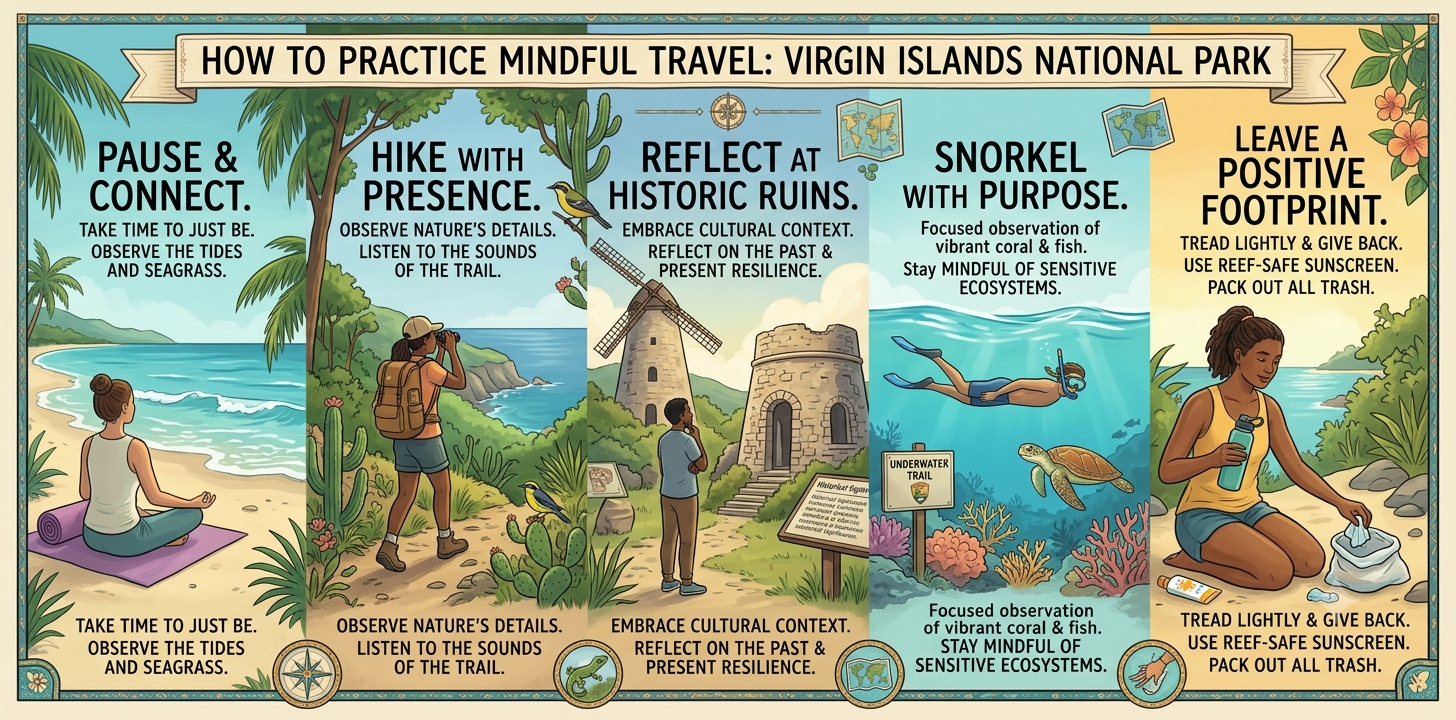
- Wearing reef-safe sunscreen
- Never standing on coral
- Avoiding contact with marine life
- Keeping boat anchors away from reefs
- Following snorkeling guidelines
Anyone learning how to practice mindful travel in Virgin Islands National Park should remember that even small actions can affect reef health.
Leave No Trace
The Leave No Trace principles apply throughout the park.
These include:
- Plan ahead.
- Stay on designated paths.
- Dispose of waste properly.
- Leave natural objects where you find them.
- Minimize campfire impacts.
- Respect wildlife.
- Be considerate of other visitors.
Following these guidelines is a key part of how to practice mindful travel in Virgin Islands National Park.
Support Local Communities
Mindful travel also means contributing positively to the local economy.
You can:
- Eat at locally owned restaurants
- Buy handmade crafts
- Hire local tour guides
- Stay in locally operated accommodations
- Learn about Virgin Islands history and culture
Responsible spending helps preserve the community that supports tourism.
Practice Sustainable Transportation
Transportation choices also influence your environmental impact.
Consider:
- Walking whenever possible
- Using park shuttle services
- Carpooling
- Renting fuel-efficient vehicles
- Planning routes efficiently
Reducing emissions supports cleaner air and healthier ecosystems.
Enjoy Beaches Responsibly
Virgin Islands National Park is home to famous beaches like Trunk Bay, Hawksnest Beach, and Cinnamon Bay.
While relaxing, remember to:
- Pick up all litter
- Avoid single-use plastics
- Respect nesting areas
- Keep noise levels low
- Follow beach regulations
Visitors exploring how to practice mindful travel in Virgin Islands National Park should recognize that beaches are living ecosystems, not just recreational spaces.
Be Present During Your Visit
Mindful travel isn’t only about conservation—it also means slowing down and appreciating your surroundings.
Try to:
- Watch a sunrise quietly
- Listen to ocean waves
- Observe birds without distractions
- Enjoy nature without constantly using your phone
- Take thoughtful photographs rather than rushing
Being present often creates the most memorable travel experiences.
Learn About Park History
Virgin Islands National Park has a rich cultural heritage.
Historic sites include:
- Sugar plantation ruins
- Ancient petroglyphs
- Historic trails
- Colonial-era structures
Learning about the area’s history deepens appreciation and encourages respectful tourism. Education is another important aspect of how to practice mindful travel in Virgin Islands National Park.
Prepare Before You Go
Preparation helps reduce environmental impact and ensures a safer visit.
Bring:
- Reusable water bottle
- Lightweight backpack
- Reef-safe sunscreen
- Reusable shopping bag
- Comfortable hiking shoes
- Hat and sunglasses
- Reusable utensils
- Camera with extra batteries
Planning ahead reduces waste and unnecessary purchases inside the park.
Share Responsible Travel Habits
After your visit, encourage others to travel responsibly.
You can:
- Share conservation tips
- Promote sustainable tourism
- Recommend eco-friendly businesses
- Inspire friends to respect nature
- Educate others about coral reef protection
Helping others learn how to practice mindful travel in Virgin Islands National Park extends your positive impact beyond your own trip.
Conclusion
Learning how to practice mindful travel in Virgin Islands National Park allows visitors to enjoy one of the Caribbean’s most beautiful destinations while helping preserve its ecosystems, wildlife, and cultural heritage. Small actions—such as using reef-safe sunscreen, respecting wildlife, reducing waste, supporting local businesses, and staying on designated trails—collectively make a significant difference. Mindful travel not only protects the park but also creates richer and more meaningful travel experiences for everyone.
FAQ
1. What is mindful travel?
Mindful travel means exploring destinations with awareness, respect for nature, and consideration for local communities while minimizing environmental impact.
2. Why is reef-safe sunscreen important?
Reef-safe sunscreen helps protect coral reefs from harmful chemicals that can damage marine ecosystems.
3. Can visitors collect shells or coral?
No. Visitors should leave shells, coral, rocks, and plants where they are to help preserve the park’s natural environment.
4. How can I reduce waste during my visit?
Carry reusable water bottles, shopping bags, food containers, and properly dispose of all trash.
5. Why should visitors stay on marked trails?
Staying on designated trails protects fragile vegetation, reduces soil erosion, and helps preserve wildlife habitats.