
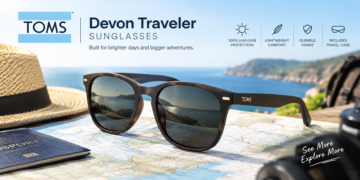




















Explore Toms Devon Traveler Sunglasses for travel, including design, comfort, lens protection, packing tips, maintenance, and FAQs.
Sunglasses are an important accessory for travelers because they help reduce glare, improve visual comfort in bright conditions, and protect the eyes when equipped with appropriate UV-blocking lenses. Whether traveling to a coastal destination, exploring a city, driving through scenic landscapes, or spending time outdoors, choosing suitable sunglasses can make a journey more comfortable.
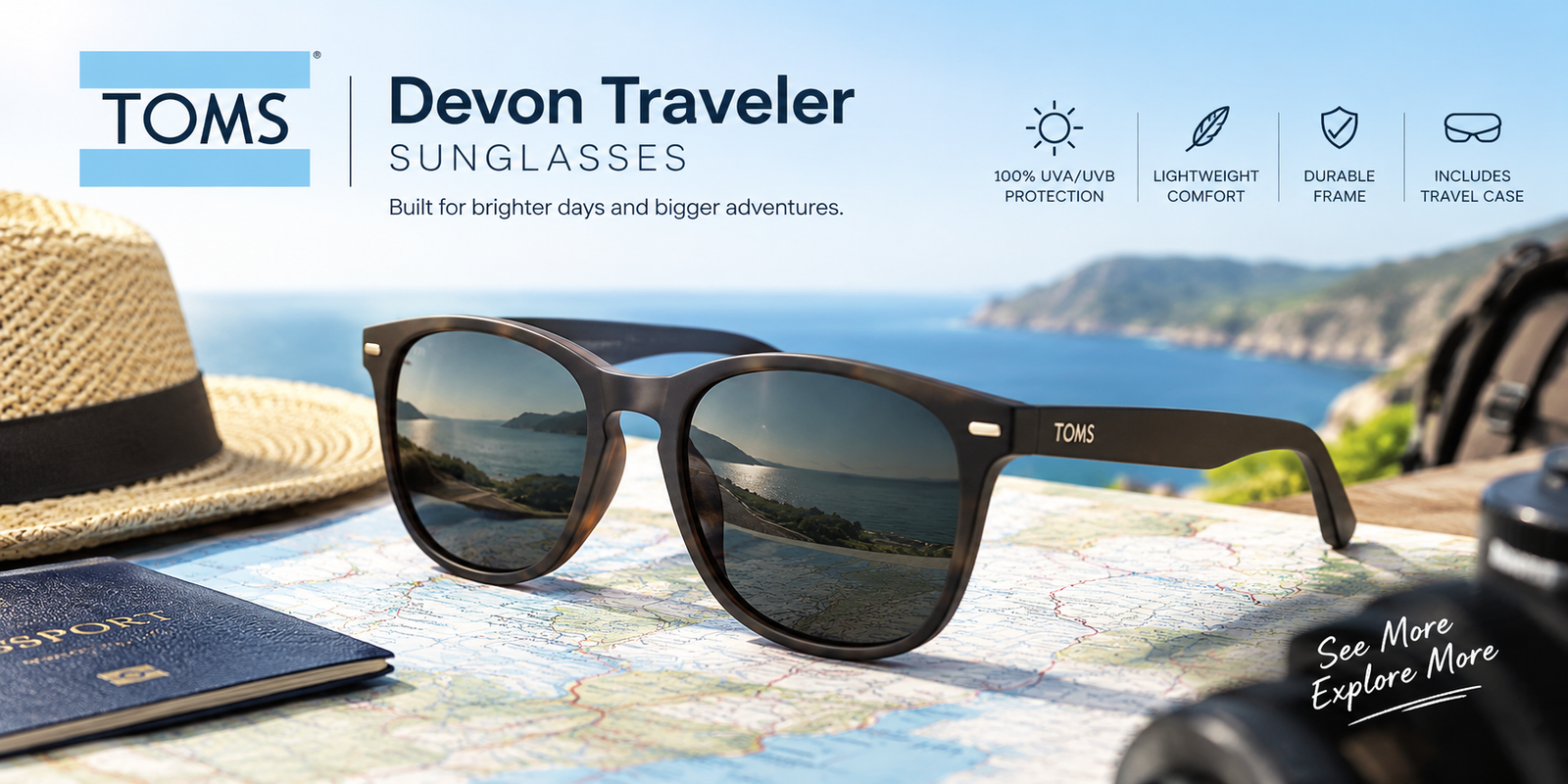
Toms Devon Traveler Sunglasses are a product name that travelers may encounter when researching eyewear for everyday use and trips. Before purchasing a particular pair, it is important to verify its frame specifications, lens features, fit, and UV protection through the seller or manufacturer. These details help determine whether the sunglasses are suitable for the travel activities being planned.
Understanding Toms Devon Traveler Sunglasses
Toms Devon Traveler Sunglasses can be researched as an option for people looking for eyewear that fits into a travel wardrobe. Travelers often prefer sunglasses that are easy to carry, comfortable during extended wear, and suitable for different outfits and environments.
However, the exact characteristics of a particular model should not be assumed from its name alone. Frame material, lens color, dimensions, weight, and protective coatings can vary between eyewear models and versions.
When evaluating these sunglasses, buyers should review the product listing carefully. Clear photographs, accurate measurements, information about UV protection, and a reliable return policy are useful indicators of a well-documented purchase.
Why Sunglasses Matter During Travel
Travel often involves changing light conditions. A traveler might move from a shaded airport terminal into bright sunlight, walk through reflective streets, or spend several hours outdoors. Suitable sunglasses can help reduce discomfort caused by bright light.
UV protection is especially important. Ultraviolet radiation can affect the eyes even when the weather is cloudy. Sunglasses labeled as providing 100% UVA and UVB protection or UV400 protection are generally suitable choices for blocking the relevant ultraviolet wavelengths.
Polarized lenses serve a different purpose. They reduce reflected glare from surfaces such as roads, water, and snow. Polarization can be helpful for sightseeing, boating, and outdoor recreation, but it does not automatically guarantee UV protection. Both features should be checked independently.
Important Features to Consider
Before selecting Toms Devon Traveler Sunglasses, travelers should consider several practical features.
1. Frame comfort
A comfortable frame should fit securely without pinching the nose or pressing excessively behind the ears. Proper fit becomes particularly important during long sightseeing days, road trips, and outdoor excursions.
2. Lens protection
Check the manufacturer’s UV protection information rather than judging protection by how dark the lenses appear. Dark lenses without adequate UV protection are not a suitable substitute for certified protective eyewear.
3. Durability
Travel accessories are frequently handled, packed, and transported. Strong construction, secure hinges, and a protective case can help reduce damage. The actual durability of a particular pair depends on its materials and construction.
4. Versatility
Travelers may prefer frames that work with casual clothing, lightweight outdoor outfits, and everyday city wear. A versatile design can reduce the need to pack multiple pairs of sunglasses.
5. Practical maintenance
Smudge-resistant features may be useful if available, but all lenses require appropriate cleaning. A microfiber cloth and a suitable eyewear cleaning solution can help maintain visibility and reduce scratching.
How to Use Sunglasses in Different Travel Settings
Sunglasses are useful across many travel situations, although the ideal lens features depend on the environment.
- City sightseeing: Sunglasses can improve comfort while walking through sunny streets, visiting outdoor attractions, and exploring open public spaces.
- Beach holidays: Bright sunlight and reflected light from water and sand can increase glare. UV protection and, where appropriate, polarized lenses are useful considerations.
- Road trips: Sunglasses may help reduce brightness and glare during daytime driving. Drivers should choose lenses that preserve adequate visibility and avoid wearing excessively dark lenses at night or in poor lighting.
- Mountain travel: Higher elevations can involve increased UV exposure. Proper eye protection is important, especially around snow, which reflects sunlight.
- Outdoor dining: Lightweight, comfortable eyewear can be convenient when moving between outdoor seating areas and shaded locations.
Toms Devon Traveler Sunglasses should be assessed against the conditions of the intended trip rather than selected on appearance alone.
Comparison Table: Features to Check Before Buying
The following table provides a practical checklist for evaluating travel sunglasses. It does not claim that every listed feature is included in the named model.
| Feature | Why It Matters for Travel | What to Check |
| UV protection | Helps protect eyes from ultraviolet radiation | Verified UVA and UVB protection or UV400 |
| Polarization | Reduces reflected glare | Confirm whether the lenses are polarized |
| Frame material | Influences weight and durability | Manufacturer’s material specifications |
| Fit | Supports comfort during extended wear | Frame width, bridge size, and temple length |
| Carrying case | Helps prevent damage in luggage | Check whether a protective case is included |
| Lens tint | Affects brightness and visual perception | Choose according to intended activities |
| Cleaning requirements | Helps maintain clear lenses | Follow manufacturer care instructions |
Packing and Caring for Travel Sunglasses
Proper packing can extend the useful life of sunglasses. A rigid protective case is generally preferable to placing eyewear loose in a backpack, handbag, or suitcase. Loose objects, keys, and toiletries can scratch lenses or damage frames.
Before packing, clean the lenses with a microfiber cloth and place the sunglasses inside their case. Avoid leaving them in a hot parked vehicle, where high temperatures may damage certain frame materials, lens coatings, or adhesives.
During the journey, use clean hands when handling the frames and hold them by the arms rather than touching the lenses. If dust or sand accumulates on the lenses, rinse it away when appropriate before wiping to avoid scratching the surface.
For routine cleaning, follow the manufacturer’s recommendations. Household cleaners, rough fabrics, and paper towels may damage some lens coatings.
Choosing the Right Pair for Your Trip
The best travel sunglasses depend on destination, activities, personal fit, and budget. Travelers spending most of their time in cities may prioritize versatile styling and comfortable everyday wear. People visiting beaches or participating in outdoor activities may place greater emphasis on glare reduction and verified UV protection.
When comparing Toms Devon Traveler Sunglasses with other options, check the listed dimensions, return conditions, warranty information, and seller reliability. If prescription lenses are required, confirm whether the frame supports them and whether the intended lens configuration is available.
It is also helpful to try sunglasses on whenever possible. A frame that looks attractive in a photograph may not fit every face comfortably. Properly fitting eyewear should remain stable during ordinary movement without causing pressure or slipping.
Conclusion
Travel sunglasses are useful accessories for improving visual comfort in bright outdoor conditions. Choosing a suitable pair requires attention to UV protection, fit, durability, lens features, and safe storage.
Toms Devon Traveler Sunglasses may be worth considering when researching travel eyewear, but their precise specifications should be verified before purchase. By checking product information and matching the features to the planned journey, travelers can make a more informed decision and care for their eyewear throughout the trip.
Frequently Asked Questions (FAQs)
1. What are Toms Devon Traveler Sunglasses?
Toms Devon Traveler Sunglasses is the product name used in this article. Buyers should consult the relevant seller or manufacturer listing to confirm the exact model and its specifications.
2. Are these sunglasses suitable for travel?
They may be suitable for everyday travel if their fit, durability, lens features, and UV protection meet the traveler’s needs. Confirm the product details before purchasing.
3. Do Toms Devon Traveler Sunglasses provide UV protection?
UV protection should be verified through the manufacturer’s specifications or product labeling. Do not assume that all sunglasses provide adequate UV protection simply because their lenses are dark.
4. Are polarized lenses necessary for traveling?
Polarized lenses are not essential for every trip, but they can reduce reflected glare from water, roads, and other surfaces. They are especially useful for some outdoor activities and driving conditions.
5. How should I pack sunglasses for a trip?
Place sunglasses in a protective case and keep them away from sharp objects, excessive heat, and heavy items that could crush the frame.
6. How can I clean travel sunglasses safely?
Use a microfiber cloth and a lens-safe cleaning solution recommended by the manufacturer. Avoid abrasive materials and harsh household cleaners.
7. What should I check before buying these sunglasses?
Review UV protection, frame dimensions, lens features, materials, price, warranty, return policy, and seller credibility. Confirm that the listed product matches the model you intend to purchase.
8. Can I wear sunglasses while driving?
Suitable sunglasses can improve comfort in bright daylight. Choose lenses that allow adequate visibility, and never use dark sunglasses at night or when lighting conditions make them unsafe.