













Explore Croatia Zadar with this travel guide covering top attractions, beaches, local food, historic sites, and the best things to do.
I was even thinking about not going to Zadar.
I was staring at my map of Croatia laid out on my kitchen table, a glass of Merlot that was rapidly gaining the upper hand over my own thinking processes, and a itinerary that read simply: Split, Dubrovnik, then stopped. Zadar was… a speck of paint I rubbed over when I turned south. A quick pit stop. Nothing else.
After that a friend, who has back-packed the Balkans about 12 months ago, went through my plan. She shook her head as if I told her, I didn‘t have dessert anymore and declared: You are an idiot, if you miss Zadar! Clear. Short. Blunt. I was able to deal with this directness, even my ego was not quite that fine with it.
Thus I veered. Years and two trips later I am the annoying friend telling you not to miss Zadar and I think there is irony in that.
For those like me a few years ago, who was leaning over a map and squinting at what seemed to be ‘Croatia Zadar’ on my search engine, don‘t worry any further. You may be questioning whether this minuscule Dalmatian city warrants a space on your itinerary. The answer is yes. Here is everything I wish someone would have told me prior to arriving, minus the red wine spills.
To get even more inspiration other than Zadar, you may find Croatian Beaches: 8 Stunning Spots You’ll Love useful.
Croatia Zadar: So… Where exactly is it?
Zadar is located on the Dalmatian coast in Croatia and lies approximately midway between Split and the Istrian peninsula. A drive from Split takes less than 1.5 hours. The drive up the coast from Dubrovnik would take around 3.5 hours.
There is excellent road and air access to Zadar too. Zadar has an international airport (ZAD) and provides many connections from other cities throughout Europe, and this service increases significantly during the high season. There is also a vital ferry port with lines to islands like Ugljan, Paman and Kornati.
Consider Zadar to be the introverted sister. Split gets the tourists, the ‘Miami of the Adriatic’, the prices that match. Dubrovnik gets the tourists, and the prices to match. Zadar is just minding its own business. And I would argue, doing it much better.
The Sea Organ: Where the Ocean Actually Talks Back
Okay, first up, I have to talk about the Sea Organ. This is the one that I actually stopped and thought. I don‘t often do that. I‘ve been to many a must-see destination that only turned out to be a plaque and a souvenir shop.
How the Sea Organ Works
Morske orgulje is actually a stone staircase built into the Zadar coastline. Concealed beneath are pipes. As waves break on and ebb back, air is pushed through the pipes producing a sound, deep and strange, but pleasant. It is the sea, singing to itself.
It‘s one of those things, when you say it to someone, you know it sounds ridiculous. When you do it, it just stuns people.
Zadar’s Famous Sunset
I had heard that Alfred Hitchcock said that the most beautiful sunset in the world was viewed from Zadar. I believed it to be a marketing strategy on the part of the local tourist board. This seemed like a sentence which would appear in travel literature without reference to it being truthful.
Then I sat on the exact same steps, hearing the organ pound underneath my own body, and I do… quite get.
Sun Greeting
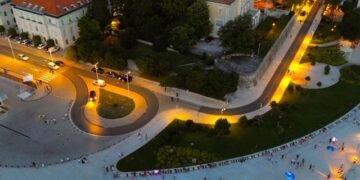
Adjacent to the Sea Organ, you will find the Sun Greeting (Pozdrav Suncu). This consists of a gigantic, circular arrangement of 300 glass panels embedded into the pavement. Beneath them are located solar panels.
In the daylight it is attractive object of art. In the evening, it provides a colorful display in changing patterns, accompanied by the music of Sea Organ. It is Zadar‘s personal light show, half the DJ, half nature.
The ‘tip’: Visit at sunset, duh. If you are around for more than one night, visit again the next evening too. The experiences are both so totally different.
Exploring the Old Town
Zadar‘s Old Town is located on a peninsula, which is so tiny that you really can‘t get totally lost in it for too long. I love this, since the best places for me are those that I can aimlessly explore.
There‘s a rhythm to it all. Smooth marble sidewalks worn down by countless footsteps. Roman ruins now set at street level alongside the modern city, with no obvious concern for protecting them behind glass cases.
Roman Forum
Same as Roman Forum. It is not caged off much or surrounded by displays and museum exhibits. Just walk straight through with columns and ruins around you until you reach a coffee shop.
It‘s actually a little bit comical, you‘d normally have a car park and ticket office built near them in most cities, and these 2,000-year-old remains become just part of your walk to the bakers in Zadar.
St Donatus’ Church
Just near Old Town you will find a bizarre, round, UFO shape that is St Donatus’ Church. It really does feel like something from an outer space film. It just feels so unlike most ornate churches in cities.
The exterior does not give much away, but the interior is impressive and has an unique atmosphere. Classical music concerts are also put on at the church in the summer. The unusual shape of the building provides interesting acoustics.
If you time your visit to coincide with one of these concerts, make sure that you get tickets and attend.
Take Your Time in Old Town Zadar
Don‘t rush through this bit of your holiday; Old Town Zadar is not about meticulous planning, it‘s about browsing without agenda a bit like finding the right book, the unexpected joy lies in finding it while looking for something else.
Best Time to Visit Zadar
Let me tell you of a mistake I made many years ago. I arrived in mid-August and planned to experience a picturesque and unhurried summer days. In reality I found it blazing hot and packed.
If you are thinking about a Croatia Zadar holiday, your choice of season is very important.
High Season (July-August)
The town is at its warmest then, the place is buzzy and the atmosphere is up and about, but the crowds are big and the prices go up high too. It‘s a good choice for you if you‘re up for the hustle and bustle and late-night revelries, but it‘s not good for peace around the Sea Organ.
Shoulder Season
As far as I can tell, these are the perfect months. Weather is usually warm enough to swim and the crowds aren‘t quite so immense. The costs also don‘t seem as daunting. I was there in late September and I would take that over August any day.
Winter (November to March)
Zadar is very quiet and atmospheric during the winter months. It can be much cheaper but there will be many less restaurants open and sites will have limited opening times. Swimming will not be a viable option.
Things to do in Zadar
Even away from the Sea Organ and the Old Town, Zadar offers a lot.
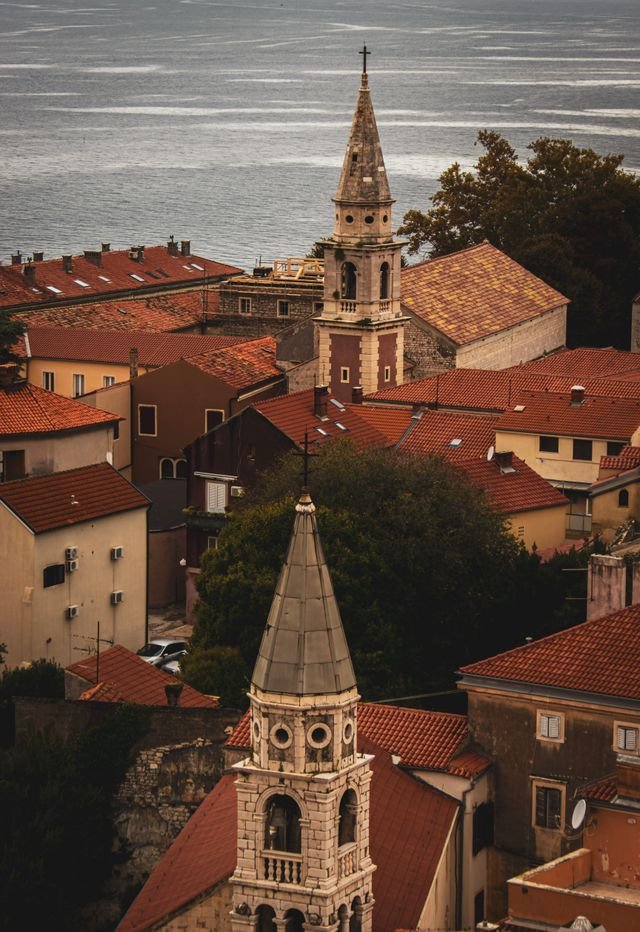
- The St Anastasia‘s Cathedral bell tower: a view of stunning terracottas on the rooftops leading out to the sea, can only be reached by climb, but it is not much more like a hike for your calves than mountain climbing.
- Take a walk along the ancient city walls: You can walk or cycle along segments of the historical walls; part of the Venetian Works of Defence forms a UNESCO World Heritage site and tells of the city‘s military history.
- Visit Five Wells Square: A small square to relax in, in the Old Town. So called because the five wells that supplied the city with water.
- Day trip to Kornati National Park: this national park consists of a chain of islands in the Adriatic Sea that appear to be located in an imaginary world. Boats run tours from Zadar and the view is spectacular on the sea.
- Discover Nin: A small historic town a little further away from Zadar (20-ish minutes) that is very sweet to explore, surrounded by interesting sights and sandy coasts.
Local Food in Zadar
The majority of accommodation in town provides meals; there are numerous restaurants also.
I will not be ashamed to say that, in Croatia, I went there to eat rather well and came back to think about it like some people think about Italy.
As Zadar is an Adriatic port, it comes as no surprise that seafood takes center stage in the local cuisine. Local restaurants usually cook it in olive oil and garlic and with great panache.
Black Risotto
Look for the black risotto (crni riot). Blackness and uniqueness come from the cuttlefish, and the looks from your companions is half of the experience.
Roasted Fish and Pag Cheese
Roasted fish with olive oil, garlic, and lemon: another popular dish you will be able to find all around the region.
Don‘t forget Pag cheese, a salty hard sheep‘s milk cheese, made on nearby Pag island. You may arrive planning to buy “just a bit”, only to leave and regret you didn‘t buy a load more.
Finding Local Konobas
For something casual and local, walk inland from the waterside restaurant. Like waterside restaurants practically everywhere, you often pay for the location. Alternatively, a traditional family run tavern, known as a konoba, may be found one or two streets back from the waterside.
Sleeping & Eating
Only a couple of hotels in the Old Town, but still quite quaint.
You‘re paying extra to be on the peninsula, that‘s clear. What this buys you is just as clear: you can walk to almost every place within the Old Town. Parking could be tricky and it might be more expensive.
If you are driving to Zadar, districts on the outskirts of the peninsula like Borik and Puntamika have better access to beaches. They may also be cheaper in terms of accommodation, but you will have to walk/ take a bus/ taxi to the Old Town.
A Quick Suggested Itinerary
A day in Zadar: Begin the day with a visit to the Roman Forum and the Church of St. Donatus. Head to a local konoba for a midday meal. The afternoon could be dedicated to the city walls and the city clock tower, before spending the evening at the Sea Organ and enjoying the sunset, and finishing with an evening meal by the waterfront.
2–3 days: Hire a boat trip to Kornati Islands on day two. You could visit Nin for its beaches and historical sights during a half-day trip.
Practical Tips Before You Go
Currency
Croatia‘s currency is the euro. They joined the euro zone in 2023 so there is no need to worry about exchanging kuna anymore. Here you will find information from the official Croatian tourist information bureau: Croatian National Tourist Board
Language
Croatian is the most commonly spoken language but in tourist areas many people do speak english.
Getting There
The Old Town is best seen on foot. If you are considering going on day trips on various occasions, it is a good idea to rent a car. In addition to day trips to the islands (Kornati, etc) it is also possible to take day trips on bus (Plitvice, etc.).
Protection from the Sun
The sun can burn very strongly in Dalmatia, even in the ‘off season’. Trust me when I say pack lots of sunscreen after I discovered it the hard way with my sunburnt shoulders!
Final remarks
In retrospect, it‘s kinda wild that I was on the verge of taking Zadar off my itinerary, as it was the “second choice” destination.
That‘s one of the things I like about travel though, the places you haven‘t heard of tend to surprise you the most
And Zadar doesnt pretends to be like Split or Dubrovnik and that‘s the reason why it is so wonderful. You can feel it in the air. They are like the friend who came to a party but not to be somebody. When you have had a conversation with them you realize they are the most interesting one.
Spend a day or three or as much time as you can spare. Sit on those steps at sunset, and listen to the sea for a while.
But just don‘t make the same mistake as I did and almost miss it. Places turn out to be the point of the whole trip.
It might not be the first thing you think of when you consider the Adriatic coast, but Croatia Zadar is the place that might come up in conversation time and time again. You should probably give it a chance.