























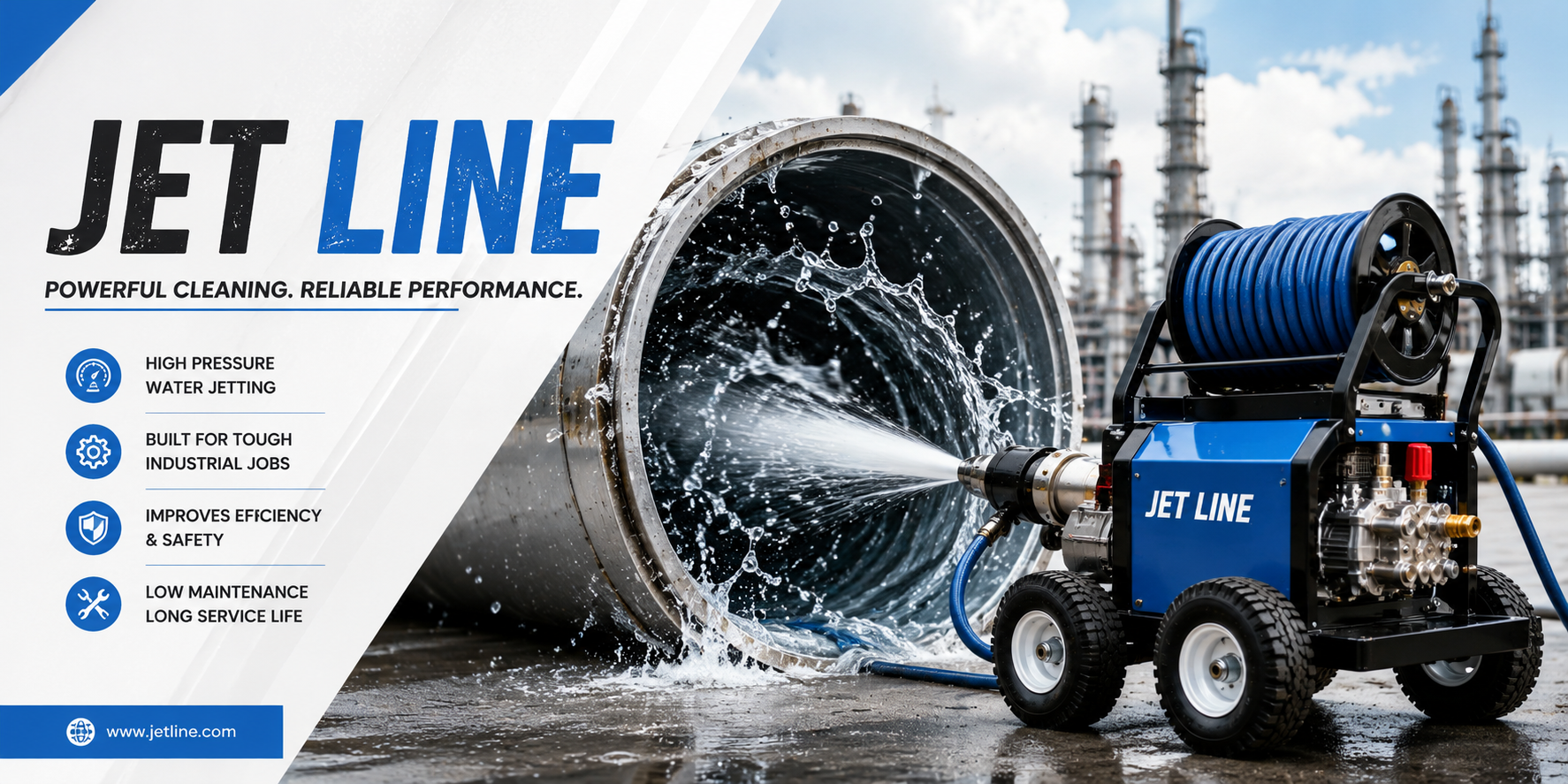
Learn how a jet line system improves industrial cleaning, boosts efficiency, lowers maintenance costs, and supports safer operations.
Industrial cleaning technology has changed dramatically over the last decade. Companies now rely on advanced systems that deliver faster cleaning, reduced downtime, and better operational safety. One of the most effective solutions used in industrial facilities is the jet line. This equipment is widely adopted in manufacturing plants, construction sites, oil refineries, and municipal maintenance projects because of its ability to handle demanding cleaning tasks with precision.
A jet line uses high-pressure water flow to remove debris, grease, sediment, and stubborn blockages from pipelines, drains, tanks, and industrial surfaces. Unlike traditional cleaning methods that require extensive manual labor, this system improves efficiency while reducing operational risks. Businesses across different industries continue to invest in these systems because they provide long-term savings and reliable performance.
Understanding Industrial Pressure Cleaning Equipment
Industrial pressure cleaning equipment is designed to deliver powerful water streams capable of breaking down heavy waste buildup. A modern jet line combines high-pressure pumps, reinforced hoses, specialized nozzles, and water tanks to create a complete cleaning solution. Operators can adjust the pressure depending on the material or blockage being treated.
These systems are especially useful in environments where debris accumulation affects productivity or safety. For example, blocked drainage systems can cause flooding, while dirty pipelines may reduce operational efficiency. By using a jet line, organizations can maintain smoother operations and avoid costly interruptions.
Another advantage is environmental efficiency. Many industrial cleaning systems rely primarily on water pressure rather than harsh chemicals. This reduces environmental impact and creates a safer workspace for employees.
Key Components of a Pressure Cleaning System
To understand how these systems work, it helps to examine the major components involved.
| Component | Function | Benefit |
| High-pressure pump | Generates strong water pressure | Removes stubborn debris quickly |
| Reinforced hose | Delivers pressurized water safely | Improves durability |
| Specialized nozzle | Directs water flow accurately | Enhances cleaning precision |
| Water tank | Stores water supply | Supports continuous operation |
| Control system | Regulates pressure and flow | Improves operator safety |
Each part plays an important role in ensuring the equipment operates efficiently. A properly maintained jet line can continue performing at a high level for many years.
Applications Across Different Industries
Industrial cleaning systems are used in a wide range of sectors. Municipal authorities often use a jet line to clean sewer systems and storm drains. These systems help prevent blockages that could lead to flooding or sanitation issues.
In manufacturing facilities, pressure cleaning equipment removes grease, chemical residue, and production waste from machinery and floors. Construction companies use high-pressure systems to clean heavy equipment and prepare surfaces for painting or repairs.
The oil and gas industry also benefits from this technology. Pipelines and storage tanks require regular cleaning to maintain efficiency and meet safety standards. A jet line can remove sludge and buildup without damaging sensitive infrastructure.
Agricultural operations also depend on industrial cleaning systems. Farms use them to clean irrigation pipes, storage tanks, and machinery exposed to dirt and residue. This helps maintain equipment lifespan and operational hygiene.
Benefits of High-Pressure Cleaning Technology
One reason businesses continue investing in industrial cleaning systems is the range of practical benefits they offer. A modern jet line can dramatically reduce cleaning time compared to manual methods. Faster cleaning means reduced downtime and increased productivity.
Another major advantage is worker safety. Manual cleaning in confined or hazardous spaces often exposes workers to risks such as chemical exposure or slips and falls. High-pressure systems minimize direct contact with contaminated surfaces.
Cost efficiency is another important factor. Although the initial investment may seem significant, the long-term savings are substantial. Reduced labor costs, fewer repairs, and improved operational performance contribute to a strong return on investment.
Additionally, these systems support better maintenance practices. Regular use of a jet line prevents excessive buildup that may otherwise lead to expensive repairs or system failures.
Maintenance and Operational Tips
Like any industrial equipment, pressure cleaning systems require proper maintenance to ensure optimal performance. Operators should inspect hoses, nozzles, and pumps regularly for wear or damage. Replacing worn parts promptly can prevent larger mechanical issues.
Water quality also matters. Dirty or contaminated water can damage internal components over time. Many facilities install filtration systems to protect their equipment and maintain consistent performance.
Training is equally important. Employees should understand proper operating procedures and safety protocols before using a jet line. Correct handling reduces accidents and improves cleaning effectiveness.
Routine servicing should also be scheduled according to manufacturer recommendations. Preventive maintenance helps extend equipment lifespan and ensures reliable operation during demanding projects.
Choosing the Right Equipment
Selecting the right industrial cleaning system depends on several factors, including pressure requirements, cleaning frequency, and operating environment. Businesses should evaluate the size of the areas being cleaned and the type of debris involved.
For smaller maintenance tasks, compact systems may provide enough power while remaining easy to transport. Large industrial operations often require heavy-duty equipment capable of continuous use under extreme conditions.
It is also important to consider energy efficiency and water consumption. A well-designed jet line balances cleaning power with operational sustainability. Companies that prioritize efficient equipment can reduce both utility costs and environmental impact.
Durability should never be overlooked. Industrial environments place heavy demands on cleaning systems, so choosing equipment made from high-quality materials can improve long-term reliability.
Future Trends in Industrial Cleaning
Technology continues to shape the future of industrial cleaning systems. Automated monitoring tools, digital pressure controls, and remote operation capabilities are becoming increasingly common. These innovations help operators improve accuracy and reduce human error.
Environmental concerns are also influencing equipment design. Manufacturers are developing systems that use less water while maintaining strong cleaning performance. As sustainability standards become stricter, industries will likely adopt even more efficient solutions.
Artificial intelligence and predictive maintenance may also play a larger role in the future. Smart sensors could identify mechanical issues before failures occur, allowing operators to maintain uninterrupted performance.
With these advancements, the role of the jet line in industrial maintenance will continue to expand across multiple sectors.
Conclusion
Industrial cleaning systems are essential for maintaining safe and efficient operations in many industries. From municipal infrastructure to manufacturing facilities, high-pressure equipment delivers reliable cleaning performance while reducing labor and maintenance costs. A properly maintained jet line provides long-term value through faster cleaning, improved safety, and operational efficiency.
As industries continue to modernize, advanced cleaning technology will remain a critical part of maintenance strategies. Businesses that invest in durable and efficient systems can improve productivity while supporting safer and cleaner working environments.
FAQ
What is a high-pressure industrial cleaning system?
It is a machine that uses pressurized water to remove dirt, grease, debris, and blockages from industrial surfaces and pipelines.
Which industries commonly use these systems?
Manufacturing, construction, oil and gas, agriculture, and municipal maintenance sectors frequently use them.
Are pressure cleaning systems environmentally friendly?
Many systems rely mainly on water pressure instead of harsh chemicals, making them a more environmentally responsible option.
How often should industrial cleaning equipment be serviced?
Routine inspections should occur regularly, while full servicing should follow manufacturer recommendations.
What factors should businesses consider before buying equipment?
Pressure capacity, durability, maintenance requirements, water efficiency, and operational needs are all important considerations.