


















Explore the best tours Dijon offers: wine, food, walking and day trips. Get honest tips, budgets and booking advice before you go.
I nearly did not go to Dijon.
Back in the day I had tentatively booked Dijon as one of those “one night and then right off to Lyon” sort of stops on a journey around eastern France. Mustard, I thought. Or maybe a good square. By lunchtime.
Next, a woman at reception handed me a tiny folded map and gestured towards a tiny owl branding a church wall, telling me to, “Begin. Touch it with your left hand. Then follow the triangles.”
I stayed for 4 days. I have been there 3 more times.
If you found this guide through Complete Travel Guide for Smart Travelers and are looking for tours in Dijon, you are likely somewhere in-between the spectrum: interested in exploring more but unsure where to start, and trying to discover which experiences are worth the investment. This article is my effort to avoid the trial-and-error adventures I endured. We will discuss walking tours, wine tours, food tours, day trips, and active options, and how to determine which experience best suits your travel itinerary.
Why Dijon Is Such a Rewarding City for Tours
Let me tell you about Dijon. It‘s a town that favors guides.
Picture it as a novel with wise and gentle, if somewhat understated, hints of what is to come. By yourself you‘ll walk down pretty streets noticing those black and white houses and glorious frontages. If you go with a good guide you instantly discover that this crooked wooden house has a tale to tell, that the face carved in stone bears a grudge, that the hidden courtyard you might happen to pass through is where a duke once held court.
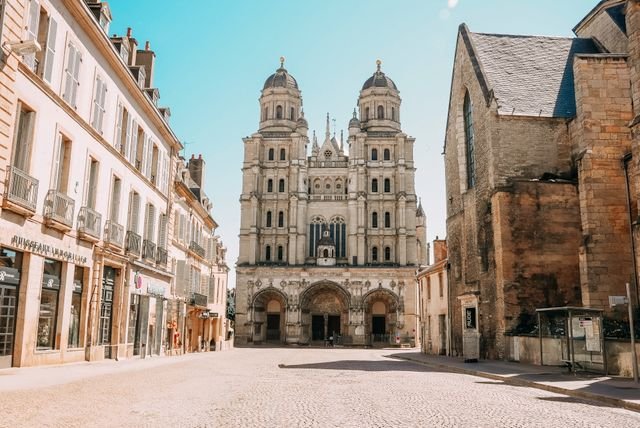
Dijon was the capital of the mighty Dukes of Burgundy, who for a time in the Middle Ages, we can say, vied with the kings of France for richness of purse and original designs. The old town embeds that history. It also sits in the Climats of Burgundy (the vineyard landscape UNESCO designated), and for many years now has been a focus for food again, with the opening of a gastronomy center.
So in one compact city you can have medieval history, art and wine country all on your doorstep and a food scene that is (seriously, once you get to know it) taking itself pretty seriously. Without getting overexcited at the wealth of options all around you, this is exactly why each tour can be so different and choosing between them can almost feel like someone handing you a tiny plate to sample at a buffet.
Let‘s correct this.
Walking Tours in Dijon: The Best Place to Start
If you only have time for one thing, make it the walking tour, and do it on day one.No getting lost in the old town because you will already know what a lane is. Dijon‘s historic center is small, but it is labyrinthine.
Case study I visited Greenfield Village to experience a guided walking tour. Thomas Edison’s Museum Management developed it, and independent tour guides are free to take the tours, creating an intimate setting and providing the guides an opportunity to relax and enjoy their duties.
If it is a pedestrian guided walk of the old-town then expect it to last around 1½ to 2 hours in duration and encompass the main sights including the Palace of the Dukes and Estates of Burgundy, Place de la Libération with its graceful semicircular square, the area of the cathedral and the shambles district around Rue de la Chouette and Rue des Forges.
An old retired history teacher, who often stopped talking suddenly and pointed a finger at the sky, gave my first guided tour.“Look,” he‘d say. It was a gargoyle, a date above a door, a secret crest. I‘ve since decided that looking up is the quintessential Dijon skill. Many people spend the whole day wandering round the city with their eyes on the ground or their smartphone, and see none of it.
Best for: first-time visitors, history buffs, independent travelers seeking companionship.
How much should you budget: most budget options are group sightseeing tours and similar in cost to a hearty meal, but private guides can be nearly ten times more expensive but flexible on “what” you see.
Top tip: go in a small group. twenty wandering the city‘s tiny medieval streets will be a world away from a group of eight.
The Owl‘s Trail (self-guided)
So, as we return to that owl,
The Owl‘s Trail: this is a three-kilometre long self-guided walk. Small brass triangles line the pavement in a line, guiding you past some twenty or so sights. The well-known statue of a little owl sits on the corner of Notre-Dame church, it is the best place for you to make a lucky sign when you walk past it. Centuries of hopeful passers have rubbed its surface smooth.
I set out on my first morning with a map, a cup of coffee turning to stone in my hand, feeling like the hero in something less than a high-stakes treasure hunt. If a guided tour is like a good documentary, the Owl‘s Trail is like the video game: Your pace, a pit stop in a bakery here, a detour looking at something there.
Ideal for: travelers traveling alone, families, cheaper places to stay.
Tip: link it to guided programs. Take advantage of the trail first for orientation, then introduce specific stories through a themed program.
Walking tours centered around themes
Other than the classics, seek out themed walks: architecture, medieval legends, back alley courtyards, or ghost-story nights. Passionate locals most often lead them, and enthusiasm is infectious. While shopping tours Dijon guides run in the dark, this is the section to look in. On one evening tour I took we ended at a candlelit courtyard. I remember thinking then, this is why I travel.
Wine Tours from Dijon: Burgundy on Your Doorstep
To be fair. For most of the people looking for tours in Dijon, this is the highlight. And why not? You‘re at the entrance to the most renowned vineyards in the world, and the tours Dijon wine experts organize are the top ones.
The Route des Grands Crus
From south of Dijon a string of villages runs along the Côte de Nuits and the Côte de Beaune. The names are like a wine list: Gevrey-Chambertin, Vougeot, Vosne-Romanée, Nuits-Saint-Georges, Then Beaune, Pommard, Meursault and Puligny-Montrachet.
A standard wine tour will take a half day (about 4 hours) or a full day (about 7 to 8 hours) in a small minibus or car. You will visit several different cellars, taste several whites and reds and learn the basic history of what makes Burgundy Burgundy.
And here‘s the basics in one sentence: in Burgundy, it‘s about the place. A line between two vineyards and a stone wall can make the wine from both sides look very different as the soil, slope and sun are different. This thing called wine people terroir. I tend to explain it this way: It‘s like two brothers and sisters who grew up in two close houses. same family and same grapes but the kitchen, neighborhood makes the difference.
My first wine tour made me learn more than a year of reading labels in an afternoon. Our guide, an affable, shy man who obviously enjoyed his work, let us taste the same grape coming from two different villages one right after another. It was incredible. I exclaimed out loud “oh!”, allegedly the right response.
Some important steps
Best for: wine lovers, couples, those who want to experience a bit of the region without having a rental car and designated driver.
Average budget: half day small group tours will average from about 80 to 150 a person and full day or private tours will be more. Tours usually include tastings, but make sure to ask about lunch.
Tips:
- If you prefer quality to quantity, book small-group or private lessons. Big coaches only treat you as cattle.
- Inquire about the number of tastings and cellars the tour includes along the way. Find out if there will also be a stop at a renowned destination such as Château du Clos de Vougeot.
- Let people know if you‘re not experienced. Good guides enjoy showing an interested beginner.
Tea my?elds We asked participants if they had cycled the wine route?>> Continue and add more information about cycling the wine routeâ?¦
Or if you’d prefer to pedal your Burgundy… There’s a canal-centric cycle route along the vineyards south of Dijon. Electric bikes allow you to manage this even if you haven‘t been on two wheels since school. I did a section on an e-bike, and spent a lot of time grinning uncontrollably and stopping to look at rows of vines like I had no idea what was going on.
Just bear in mind: alcohol and cycling is as much of a bad idea as it ever was, and take the same cautious approach to how much you consume.
Food and Gastronomy Tours: Eat Your Way Through Dijon
Mustard may put Dijon on the map, but let’s be honest: the food history here is far richer. It’s also where we find boeuf bourguignon, oeufs en meurette, garlic butter snails, gougères (think cheese puffs I could happily eat a dozen of), smelly Époisses cheese, pain d’épices, and blackcurrant liqueur (blanket it with white wine, and you’ve got a Kir, which takes its name from a former Dijon mayor).
A food tour is one of the friendliest manners to taste all of it.
Market & tasting tours
The covered market, Les Halles, is a must, which as days Market you can‘t miss. Stroll among stands of cheese, meat, bread and fresh produce, and you will think you have entered the city living room. A good food walk will guide you through, familiarize you with the producers and even give you some samples.
The memory of biting into a sample of aged Comté (from a little further east in the region) that a cheesemonger pressed into my palm remains vivid. “Hold on,” he said, as I bit down. “Now let it out through your nose.” And I did. And the taste blossomed like fireworks in slow motion. I have been chasing that moment ever since.
Best for: Food lovers, families and anywho believes the best way to experience a destination is with lunch.
Average duration: 2.5 to 3.5 hours, normally about the same as a really decent sit-down meal (or a little more), with enough tastings to substitute for eating.
Advice: go hungry. I don’t joke. Breakfast is too much.
Mustard goes through
Absolutely you can (and should) do a mustard moment. Loads of shops in the center sell a wide selection of Dijon mustard and you‘ll see it in pretty much every flavor possible. Some of the shops are fairly interesting, with some drawing fresh mustard from tap style dispensers into ceramic pots. Take a tour/participate in a workshop to see how makers make it and even blend your own.
Learning this fun fact I discovered: “Dijon mustard” is not a single mustard but a style that uses brown mustard seeds to give it a sharp, clean kick of heat. It’s kind of like the espresso of condiments: small, fierce, and more intense than you expect.
The wonderful gastronomy center
Dijon Centre International de la Gastronomie et du Vin If you’re into the “why” behind the food then this is interesting. It’s a high tech, interactive centre with exhibitions, tastings and workshops about the history of the origins of food in France. Good for a rainy day.
Day Trips from Dijon: The Best Tours Beyond the City
Dijon is a good starting point. I would choose these for the day trips.
Beaune and the Hospices
People know Beaune as the wine capital of Burgundy and it is just a short trip from Dijon (less than half an hour on the train). The highlight is the Hospices de Beaune which was a medieval charity hospital founded in the 15th century, and people best recognise it by its brightly coloured glazed tile roof. The first time I entered the courtyards I actually froze in awe. It looks like a picture from a fairy story; the sort of place you expect to see a knight emerge from.
You could also do Beaune on your own (You can find more info about Beaune here), but it is also often part of a wine tour, and that’s a nice combo to combine the city with the vineyards.
Cluny and the Abbey
Farther south, Cluny was home to one of the most notable monastic orders in medieval Europe. The original abbey is largely in ruins, though what remains is impressive in scale. You explore this site best as an all-day trip, ideally by car or sign up for a tour that‘s normally about an hour and a half away.
Vézelay and the Burgundy region
North of Dijon, Vézelay stands out for its hilltop setting and its basilica, which has historically served as a hotspot on the pilgrimage circuit. Along with off-the-beaten-track Burgundy, that‘s a longer, but still lovely, day out.
Chateaux and canals
With castles everywhere and plenty of room to breathe along the Canal de Bourgogne, Burgundy is the perfect place for a relaxed bike ride or stroll. And a whole day if you’re into this “slower than molasses” way of traveling.
A tip for every all day trip: think at the beginning how you would like to do your trip in terms of flexibility, enjoyment and cost. You can choose between a private driver, a small group tour or try to do it on your own with public transport, there is no bad choice!
Active and Alternative Tours
Not everyone wants a slow amble. If you like a little movement:
- E-bike and bike tours through the city, along the canals or on the vineyards,
- Segway or scooter tours (enjoyable and ridiculously fun… in the best possible way)
- Hot air balloon flights above the vineyards, if you’re feeling romantic and early-rise-ish
- Take a photography walk for shots of the rooftops, specifically at ‘golden hour’ (just before sunset), when the light is most dramatic.
A confession: I fell for a city bike tour on a whim, bracing myself for boredom. What I got was a neighborhood I never would have discovered on my own and a lengthy, meandering conversation with a guide over her favorite bakery. A tour isn’t only about what you see; it’s also about who shows it to you.
How to Choose the Right Tour in Dijon
With so many options, here‘s how I‘d decide, like a very short quiz:
- First time, can’t you stay long? Try a guided Old Town walk combined with the Owl‘s Trail.
- Like wine? Why not do the half-day or full-day Route des Grands Crus tour on a small-group basis.
- Food by trip? First a market, and then tasting, tour and a stop at the mustard.
- Traveling with children? The Owl‘s Trail is like a treasure hunt. Include a visit to the market and a taste of the gingerbread.
- Are you short on time? The best way to make the most of your hours is a half day wine tour or 2-hour walking tour.
- Love slow, scenic travel? Pedal to the vineyards or take a day-trip in the countryside.
Practical Tips for Booking Tours in Dijon
Ideal Timing in Spring and fall are perfect: temperate weather, less packed and autumn, the time to harvest in the vineyards. The summer is dry and hectic, and winter is relaxed with Christmas markets.
When to book. Book tours of wineries and private guides in advance, particularly during the high season. Walking tours may require less notice, but their groups also tend to sell out.
What to wear. Shoes you can walk in all day (those cobblestone streets are gorgeous but brutal), a light jacket, water, and a dose of inquisitiveness. If you‘re on a wine tour, your tour company may include bottled water in its kit but it‘s not a bad idea to bring your own.
Read the T & C. Take care to look at how many people are in a group, what language the guide speaks, how long it lasts, what the tour includes (tastings, lunch, entrance fees), and what the cancellation policy is. If reviews talk about the guide specifically, that usually indicates a good tour – whatever tours the Dijon suppliers may be offering.
Arriving by train. You can easily reach it by train, with a quick TGV train from Paris, taking only an hour and a half to two hours. It is a great side trip from Paris or a perfect stop on your way south
My Honest Take After Several Visits
There is only one piece of advice I want to leave you with, and it‘s this: never be afraid to mix it up.
The most amazing trip I had to Dijon brought together all three of these experiences. A narrated walk through the city on my first day, a wine tour the second, when I was prepared to be amazed, and a relaxed self-guided wandering through the city on the third, without a plan other than to follow what smelled good.
That‘s pretty much the key to tours in Dijon. They‘re not an itinerary of points of interest. They‘re a way to lease someone else‘s local expertise, and that is a good thing to have, especially in a city as layered as this.
Mustard or not, I visited Dijon. I left with a love for the city.
Frequently Asked Questions About Tours in Dijon
How many days?
Two is sufficient to cover the highlights (and three to four is enough to add a wine tour and a day trip without feeling rushed).
What is the number 1 tour in Dijon for first time visitors?
A guided walk of the old town with a small group, and preferably combine it with a self-guided Owl’s Trail.
Is a wine tour from Dijon possible without a car?
Yes. Small-group and private tours include transportation, and trains link the winery towns around Dijon to the city.
Is the trail around the Owl free?
The forest trail is free to use. They provide maps and guidebooks at the visitor centre.
Are tours in Dijon fun for kids?
Several. Sightseeing like the Owl‘s Trail, market trips, and mustard or gingerbread tastings are often family-friendly. Wine tours are more appropriate for adults.
What is the best time of year for taking tours in Dijon?
For weather and atmosphere, spring and early autumn are the best, autumn also brings harvest.
Should I book in advance?
Yes for wine tours, popular day trips and private guides. Not so much for walking tours.
Final Thoughts
By whatever tour you find yourself after, whether it’s dukes, Burgundy wine, market cheese or a small stone owl worth a left-handed stroke, you’ll find a tour in Dijon for you. Begin with a walk, throw in a wine tour and toss in some food experiences, then leave some wiggle room for aimless wandering. Barring ruined holidays, travelers to Dijon always seem to leave happy.
Perhaps, you‘ll come for the mustard. But I think you‘ll stay for something else.
Official Resources for Planning Your Trip
If you want to get to the source then the best places to browse for up-to-date opening hours, prices, routes etc are:
- Climats of Burgundy :Official UNESCO World Heritage listing for the Burgundy vineyards and Dijon’s historic centre. It’s the most authoritative link for this list. Use it on “Climats of Burgundy” in the “Why Dijon Is Such a Rewarding City for Tours” part.
- The Owl’s Trail : Official tourist office page for the owl’s trail self-guided walking route. Closely related to your topic (tours), so readers will find it relevant and click through. Use it the first time you mention the owl’s trail.