





















Discover whether the sondur travel cushion offers comfort and support on long journeys. Explore its features, benefits, and travel value.
You know the feeling. You spend ten minutes searching and then they’re all over your feed, an inflatable seat pad demonstrated in three separate videos, all of which will allegedly be your butt’s salvation. Earlier this year, my own attempts at viral tech failed me at least once .
But here’s the thing. I’m relatively sedentary.Whether I’m flying, spending hours driving to see family, or sitting at my desk all day for work, my back eventually starts to ache. It feels like my chair is saying, “Seriously, how much longer are you going to sit here?” And before long, my tailbone starts making its discomfort known, too.
Welcome to my Caribbean Airlines Review: The Truth Every Flyer Must Know, where how you sit on the flight matters just as much as the flight itself. This is my experience with the Sondur travel cushion: what I will and won’t recommend, how it performed on my trip in the car, on the plane, and at my desk, and who I believe should invest.
What Is a Sondur Travel Cushion?
Sondur‘s travel cushion, for instance, consists of an inflatable air-cell seat pad. Rather than a piece of solid foam, you sit on a lattice of small compressed air molecules that are squeezed and displaced as you shift around. The goal is that you press against the entire seat, not just your buns and tailbone.
Just compare it to standing on one nail and lying down on a bunch of nails. Still the same weight, but distributed across a lot more points so it’s completely different.
A few features worth knowing about:
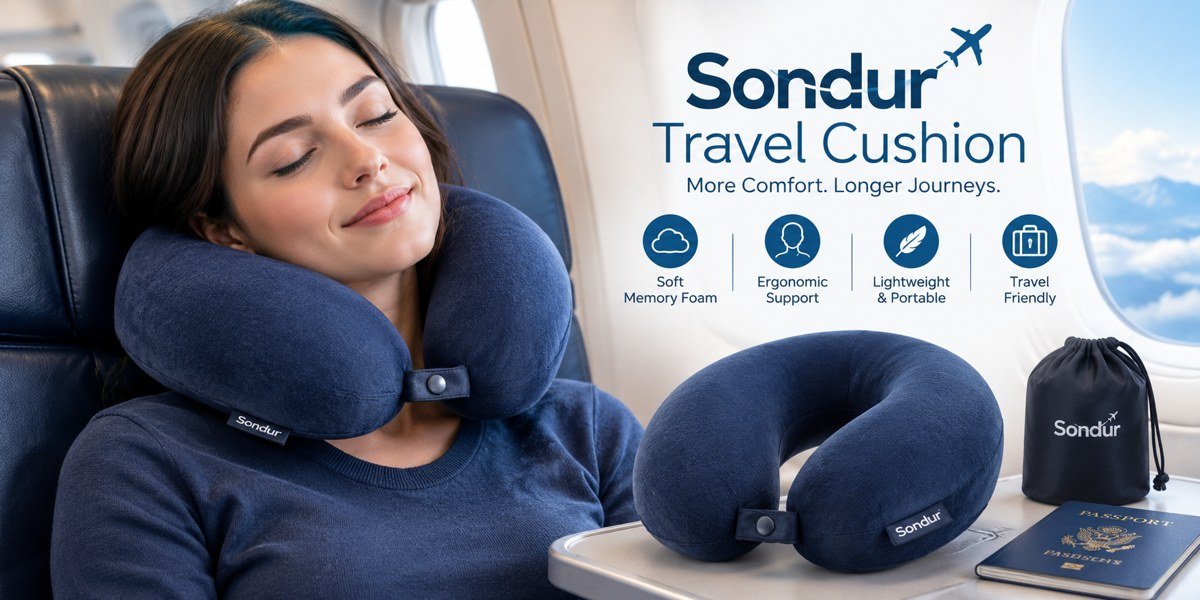
- Adjustable firmness. A pump and release valve allow you to add or remove air even while sitting.
- Lightweight, compact. deflates and packs into a storage pouch that will stow easily in your carry-on or tote bag.
- BASE. Textured The bottom grips the seat, so the cushion doesn‘t slide around every time you shift.
- Various applications. You will find it on planes, in cars, on office chairs, and even on wheelchairs.
A couple of things to keep in mind: the number of air cells varies depending on where you read about it. I’ve come across 24, 42 and 60+ in various listings and reviews. I found the listings keep changing and sellers have offered multiple versions of the product so look at the product page of whoever you buy from.
My First Impressions Out of the Pouch
I unrolled this thing a little like I was cracking open a small, weirdly shaped life raft.I really liked that the pillow came in a compact, round travel bag with a strap and clip. I tend to lose small things in my carry-on, so having a dedicated bag to keep everything together was a nice touch.
Inflating it was easier than I thought; an adequate number of squeezes of the built-in pump, then release the valve until it was comfortable. Had one go at it and over-inflated it; it was like sitting on a pool toy. Finally, I learned that less is definitely more; you want to sink into it, not bounce on top of it.
It‘s actually lightweight as well, I read it‘s less than one pound so it won‘t add weight to your bag. That‘s a big deal more than you know from when you‘re already lugging around a laptop and jacket and a suspiciously large bag of snacks.
Testing It on a Long Flight
The place where the Sondur travel cushion seems to make the most sense in theory is the plane, so I put it to the test there.
If we’re just talking, we don’t really optimize our economy seats for comfort. At about the two hour mark of a flight I begin my “shuffle.” You know that flight. Shift left, shift right, lean forward, stretch mid-air, rinse, repeat. It’s a little exhausting dance that doesn’t really do the job.
As I was flying with the cushion, I realized I was shuffling a lot less. Sometimes I would feel the air cells shifting around every time I shifted position, meaning the pressure never really stayed in one place long enough to cause an ache. At the end of the flight I was not counting the seconds until I could walk again, which for me is quite the feat.
A couple of practical notes from the flight:
- Pump it up a little higher than you think it needs to be, as the pressure decreases because of the change that air expands.
- Ensure that it is level. An unevenly balanced seat will tilt the cushion.
- Stay clear of on sharp objects. It is very easy for an accidental key or object in a back pocket to damage an inflatable shell.
It didn’t transport economy to business class, but it did take the sting out of it and frankly that was enough for me.
Using It in the Car
Next: a long haul. Family road trips come with me as the driver which translates, in the car-seat department, to me being in a seat that has the support of a rolled-up towel.
The cushion added some height, which I liked. It helped me sit a little higher, giving me a clearer view of the dashboard while making the seat feel slightly softer and more comfortable. After a four-hour drive, I didn’t feel that creeping stiffness around my hips.
One thing to watch: because it raises your seating position, tall drivers may notice less headroom. If you‘re already close to the roof, try it in the car before you commit to it on a long trip.
And finally, if you are using it on a seat with side bolsters that you’re particularly fond of, don’t because the cushion can rest uncomfortably against them. Just a tiny detail worth keeping in mind.
The Desk Test: Eight Hours in the Office
This is where the actual day-to-day pain lives. My chair in the home office is perfectly fine as a park bench after approximately three hours.
I put the Sondur on the chair and managed a typical day. At about four hours it would normally have started to register (as that tends to be when the tailbone really lets me know about itself) but by the end of the workday I was less exhausted than I often am. I will say it didn’t solve all my problems because… well, it didn’t…but to sit on was definitely more comfortable.
I did notice a few things:
- The Cushion Won‘t Fix Your Posture There’s no getting around slouching, so you might as well be comfortable when you do.
- You still have to rise to get out of your seat and move. There is no cushion for that.
- The foam pad I formerly used became flattened after approximately an hour. The cushion in the air did seem to retain its shape far better.
It wasn’t even close to how my traditional foam cushion did. Foam is compressed and stays compressed. Air is constantly trying to push back and blow up again as you move.
The Pros and Cons
So this is where I ended up after a few weeks of daily use.
What I liked:
- Genuinely alleviates pressure on the hips and tailbone when sitting for long periods
- Customisable firmness You are able to adjust it along the way.
- Portable Light-weight
- Plane, The cars work and the office chair.
- Ventilated design that didn’t leave me clammy
What I didn‘t love:
- It’s slightly more expensive than a simple foam cushion
- Inflatable it’s something that you could pierce if you’re not paying attention
- You‘ve gained extra height in your chair, which is not always a good thing.
- It will not improve your posture or the pain that you have.
- Data on cell counts and versions also differs between sellers, that could be confusing for you
Pricing, Capital Requirements, and Where to Purchase
They aren’t cheap, but retail listings hovered at about $40 or so at the time I looked, with other sites occasionally selling and discounting them. The fact that so many brands have pushed this product online on Facebook and Instagram means it’s out there everywhere although not all of them are created equally.
Here’s my tip: If you can buy it from the website itself or from an established online retailer you trust, go for that option. Otherwise, if the seller or price seems suspect, look into reviews of that shop first. Sometimes these sellers are just a mixture of legit stores and lookalike listings, and you’ll want to know who you’re giving money to before you hand it over.
Is it Safe to Pain with the Sondur Travel Cushion?
Important update The brand markets Sondur as a comfort product, not a medical device, and I am not a doctor. A cushion can support comfort during sitting, but you should not do so to treat or heal any media condition. If you have ongoing pain in your back, hips or tailbone, or if you recently had an injury or if you have recently had an injury or surgery you should consult a doctor before using any cushion.
I’m not being overly cautious. It’s simply the way I do business. There’s loads of information out there that I don’t believe in or articles where I’ve read them and just think, “Glad I didn’t read that.
Who Should Buy It
It‘s a good fit if you:
- Travel frequently and hate long haul economy flights
- Undoubtedly drive for hours on end
- Desk work at a less than perfect table in a less than perfect office
- Looking for a small, portable device
You might want to skip it if you:
- I already have a decent ergonomic chair and not much sitting time.
- Do you love tall and worry about zoning your car?
- You prefer firm foam cushions and not the feeling of air.
- Needs something that adjust posture or address a medical conditions
Alternatives Worth Considering
The Sondur isn‘t the only option. A few types to compare:
- Memory foam cushions: These are less expensive and cannot be punctured, but they will flatten out.
- Gel cushions: They stay cool, are comfortable, and provide a firm support but tend to be heavier and bulkier.
- Wedge or coccyx cushions: These are specifically shaped to remove the pressure from the tailbone but aren’t as adjustable.
If you rarely get out of the house and spend most of your time on the couch, a firm foam cushion is probably good enough. If you’re literally always on the go, you can’t really beat the packing ability of an inflatable one.
Frequently Asked Questions
Will the Sondur travel cushion be effective in airplanes? Yes, it does very well on airplanes! Use 25 to 50% less air than you would for the equivalent seat on the ground, to account for cabin pressure.
Can I put it on an office chair? Sure, a lot of people use it on their desk, and this is one of the more popular uses.
Is it good for heavy people? Some reviews suggest a weight rating of hundreds of pounds, but look at the specification for the specific model you‘re purchasing.
How to inflate it? Inflate it through the valve or with the pump provided and release the air using the release button to adjust the level of firmness.
Is It Legit or A Scam? The product itself is legitimate and real sellers sell it. Due to the fact that most brands are marketing, more sticks to reliable sellers and checks the return policy before purchasing.
How do I clean it? Wipe it with a clean, damp cloth, and let it dry completely before you pack it away.
My Final Verdict
Was it really worth it?
Mostly, yes. Not because it’s magic, because it’s not, but because it turned out to make slouching through airport, car and office hours significantly less horrible. I entered this experiment ready to be let down, and I was surprised to find myself actually wearing it most weeks.
If you do a lot of sitting and your tailbone or hips start protesting, consider the Sondur travel cushion. But don‘t expect the world, purchase it from a reputable retailer, and don‘t use it to treat anything. Rather have a nice new seat supplement, and not a medical solution.
And should you decide to give this a shot? Start with the air very lightly really. You’ll want to.
Helpful Resources
Sore tailbone after a long day in your seat? You’re not alone. According to the NHS, tailbone pain may improve after a few weeks, but it can sometimes last longer. If yours isn’t getting better or it’s starting to get in the way of your day, it’s worth checking in with your doctor. Their page on tailbone (coccyx) pain explains what can cause it and what you can try at home.
One more thing before your next long trip. Even with a comfy cushion, you shouldn’t stay glued to your seat. Harvard Health explains that hours of sitting in planes, trains or cars can increase the risk of blood clots in your legs, so stand up, stretch and walk around whenever you can. Here are their tips for staying healthy on long trips.